
Fence Contractor in Westerly, RI Watch Hill, Misquamicut and the Rhode Island Shoreline
Salt air, wind, sand and flood zones change how a fence should be built. Arrow Fence Inc., a family-run Connecticut contractor since 1979, serves Westerly and Watch Hill and will tell you honestly what holds up on the coast.
In this guide
- A Fence Contractor Serving Westerly, Watch Hill and Misquamicut
- Rhode Island Is Not Connecticut: What Changes
- Salt, Wind and Sand: What the Coast Does to a Fence
- Fence Materials for the Westerly Shoreline
- Flood Zones, V-Zones and Storm Surge
- Watch Hill and Misquamicut: Design Notes
- Inland Westerly: Bradford, Dunn’s Corners and the Pawcatuck Valley
- What Affects the Price of a Westerly Fence
- Westerly Zoning, Building and Coastal Permits
- How an Arrow Estimate Works for Westerly Properties
- When a Fence Is Not the Right Choice on the Coast
- Nearby Towns We Serve
- Frequently Asked Questions: Fence Contractor in Westerly, RI
- Ready to Plan Your Westerly or Watch Hill Fence?
Quick answer: what is the best fence near the water in Westerly, RI?
Near the shore, vinyl and powder-coated aluminum resist salt and moisture without rusting or rotting, cedar works if it is detailed and maintained for the exposure, and open styles handle wind and storm water better than solid walls. Arrow Fence Inc. installs all of them in Westerly, Watch Hill and Misquamicut.
Rhode Island rules differ from Connecticut’s, so confirm height, setback, flood-zone and coastal requirements with the Town of Westerly before you order. Call (860) 267-6636 or request an estimate.
A Fence Contractor Serving Westerly, Watch Hill and Misquamicut
Westerly is the southwest corner of Rhode Island, bordered by the Pawcatuck River on the west and the Atlantic on the south. It includes the village of Watch Hill, the beach community of Misquamicut, the Weekapaug shoreline, and inland neighborhoods such as Bradford and Dunn’s Corners. For fence purposes it is really two places: the exposed coast, and the quieter inland towns behind it.
Arrow Fence Inc. is a family company based at 192 East High Street in East Hampton, Connecticut. We have installed fences since 1979, and we serve Westerly and Watch Hill, Rhode Island as well as our Connecticut service area. Stephen Howard founded the company, and his wife Maura Howard is its president. Our own crews do the work. We install vinyl, aluminum, cedar privacy, cedar picket, post-and-rail and chain link, plus commercial fencing.
We are honest about where we are: Westerly is outside our immediate home area, and Rhode Island has its own rules. This page explains what is different about coastal Westerly, so you can make a good decision whoever you hire.
Rhode Island Is Not Connecticut: What Changes
If you have read our Connecticut pages and guides, treat them as general background only. Rhode Island has its own state building code, its own contractor registration system, its own coastal permitting agency and its own town zoning ordinances. This table sums up how to approach the main points.
| Topic | What to do in Westerly |
|---|---|
| Fence height and setbacks | Set by the Town of Westerly’s zoning ordinance. Ask the zoning office about your lot and fence height. |
| Building and pool barriers | Rhode Island State Building Codes are enforced by the town’s Building Office. Confirm barrier requirements with them. |
| Flood zones | Parts of Westerly lie in FEMA-mapped flood zones. Ask the town which zone covers your lot and what applies there. |
| Coastal land | The Rhode Island Coastal Resources Management Council regulates work near the shoreline. Ask whether your lot is affected. |
| Contractor credentials | Our registration (HIC.0537503) is a Connecticut credential. Ask us directly about Rhode Island registration for your job. |
| Utility mark-out | Call 811 before any digging, in Rhode Island as in Connecticut. |
We do not state Westerly’s height or setback numbers on this page, because they depend on zoning district and change over time. The town publishes a Zoning page with its zoning ordinance, a schedule of dimensional regulations and a summary of rules for fences and walls. Start there, then confirm with the zoning official for your lot.
Salt, Wind and Sand: What the Coast Does to a Fence
Coastal fences age faster than inland fences, and the reasons are specific.
Salt
Salt spray and salt-laden fog corrode untreated metal. That includes screws, hinges, latches and the cut ends of fasteners, which fail long before the fence panel itself. On the coast, ask what coating or metal the hardware is made from. Hot-dip galvanized or stainless hardware is the common recommendation for exposed sites. Powder coating protects aluminum surfaces, but scratches should be touched up.
Wind
Shoreline sites see stronger and steadier wind than inland yards. A solid panel acts like a sail. Posts must be set deep and well, and sometimes the design should let wind through, such as board-on-board with small gaps, spaced pickets or open aluminum. Gates catch the wind most of all, so latches and hinges deserve extra attention.
Sand and high water
Sandy soil drains well but it can be loose, and near the water the water table sits close to the surface. Footings may need to be larger or deeper to hold. Frost still applies in Rhode Island winters, so shallow posts remain a risk. Our post depth guide explains why, even though it was written for Connecticut.
Sun and humidity
Reflected light off water and sand is intense. Wood bleaches faster, and finishes fade. In shaded, damp corners behind dunes and hedges, mildew and algae are common on any material.
Fence Materials for the Westerly Shoreline
Our guide to coastal and shoreline fence materials covers this in depth. Here is the short version for Westerly.
| Material | On the Westerly coast | Honest limits |
|---|---|---|
| Vinyl (white or tan) | Does not rust or rot, needs no paint, rinses clean of salt film | Solid panels catch wind; only two colors |
| Aluminum | Powder-coated, rust-free, open to wind and water | No privacy on its own; keep hardware in good condition |
| Cedar | Weathers to a silver tone that suits shingled shoreline homes | Needs sealing, hardware must be corrosion-resistant, rots faster in wet ground |
| Chain link | Practical for utility areas and dog runs | Galvanized and vinyl-coated coatings still wear in salt air |
| Post-and-rail | Open, wind-friendly, suits larger lots and dune-side boundaries | Wood needs care; add mesh for small animals |
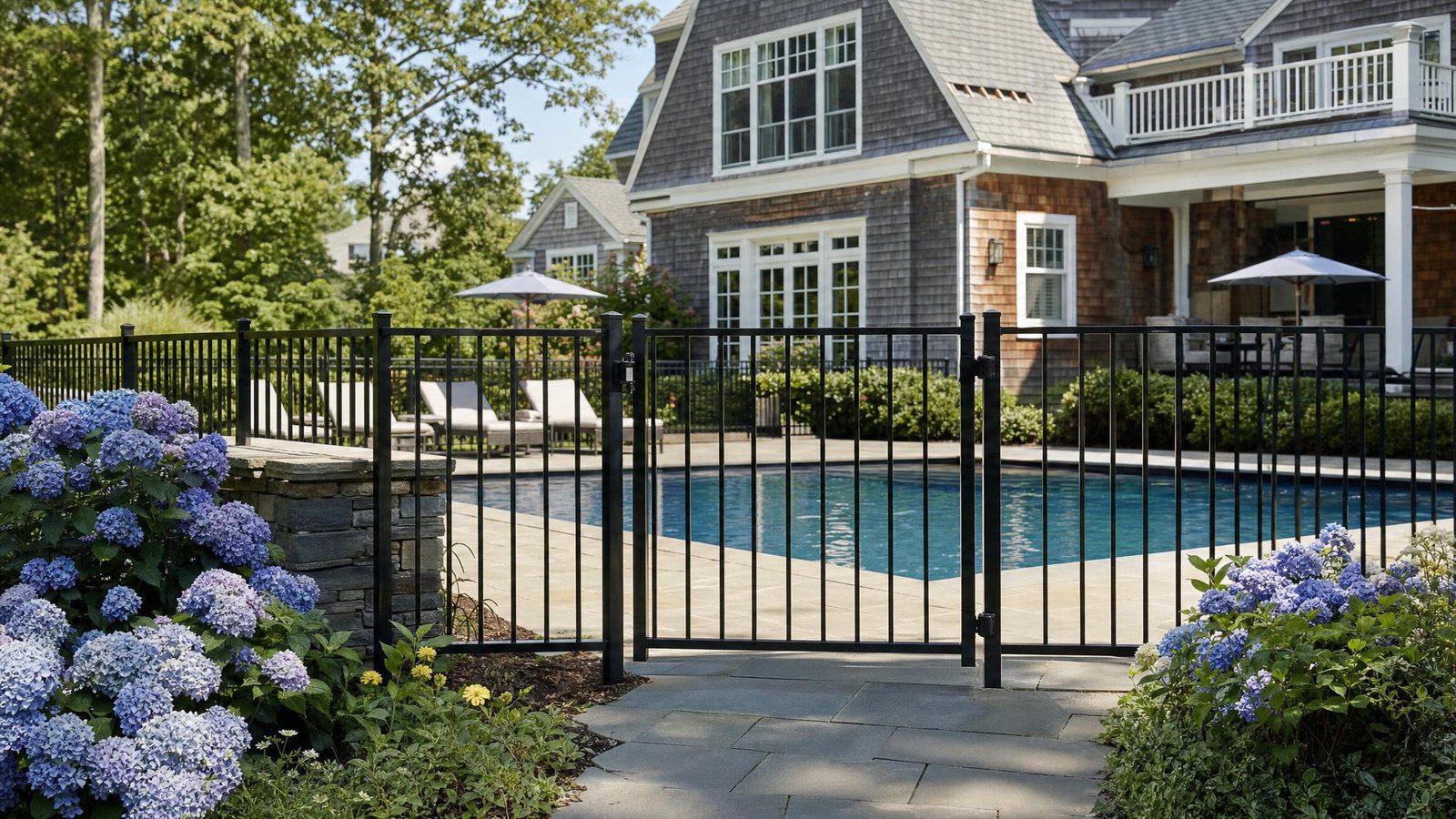
We do not recommend one material for every coastal lot. A vinyl fence around a Misquamicut cottage, an aluminum fence along a Watch Hill driveway and a cedar picket fence at an inland farmhouse in Bradford can each be the right answer. Read about the vinyl and aluminum options, then talk to us about your exposure.
Want a firm number for your property?
Flood Zones, V-Zones and Storm Surge
Much of Westerly’s shoreline and many properties along the Pawcatuck River and the salt ponds lie in FEMA-mapped flood zones. The Town of Westerly says on its Flood Zone Management and Protection page that four flood zones are subject to regulation in town: Zone A, Zone AE, Zone AE in the floodway, and Zone VE. Zone VE is the high-energy coastal zone where waves, not just still water, are expected in a major storm.
Why this matters for a fence:
- A solid fence can block floodwater and debris and then fail or cause damage to a neighbor. Open styles, or designs that let water pass, are often a better fit.
- Rules in flood zones can be stricter on what may be built, so ask before you buy materials.
- Posts and footings must resist scour, which is erosion at the base during flooding.
- Replacing a fence after a storm is easier if the design is simple and the parts are standard.
Ask the town which zone your lot is in, using the flood map information on its page. We can then talk about the design. We do not give legal or insurance advice, and a fence will not by itself change a property’s flood rating.
Watch Hill and Misquamicut: Design Notes
Watch Hill is known for its historic character, shingled houses and carefully kept hedges and gardens. Misquamicut is a beach community of cottages, seasonal rentals, beach clubs and year-round homes. Both call for restraint.
- Matching the architecture. A white picket fence or a restrained cedar run may suit a Watch Hill house; a bulky privacy wall usually does not. Westerly’s Development Services department lists architectural review among its functions, so ask whether any review applies to your property.
- Respecting the view. Many shoreline lots depend on sightlines. Open aluminum or low picket often protects them. Check height limits first.
- Dunes and beach edges. Dunes and beach vegetation protect the coast. Do not place a fence on or across them without confirming what is allowed. The Rhode Island Coastal Resources Management Council is the agency to ask about work near the shoreline.
- Seasonal homes. If the house is empty for part of the year, a durable, low-maintenance fence saves trips. Vinyl and aluminum are the usual choices.
- Associations. Some beach neighborhoods have association rules about fences, colors and heights. Our HOA fencing guide, written for Connecticut, explains how to approach approval.
Inland Westerly: Bradford, Dunn’s Corners and the Pawcatuck Valley
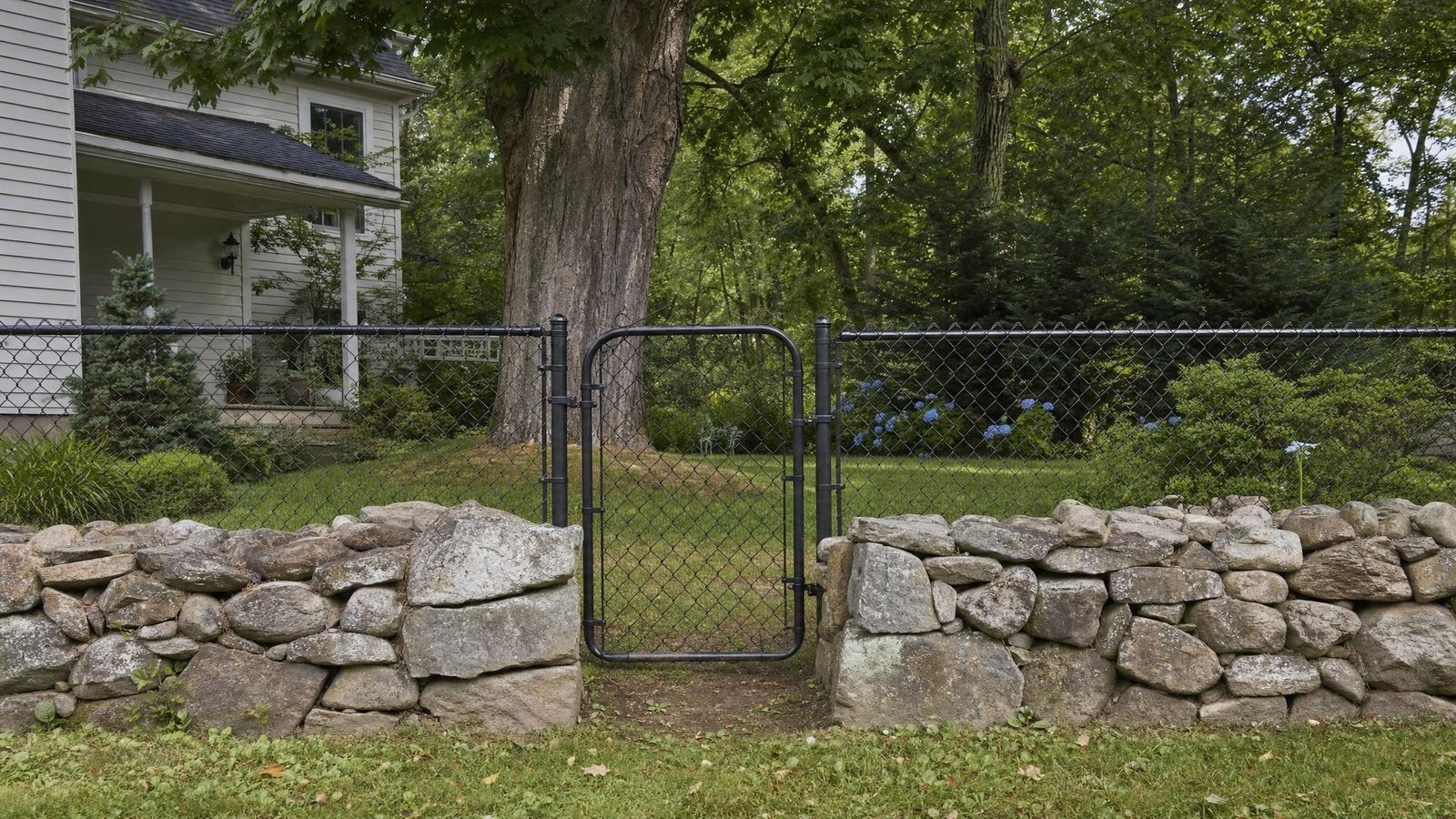
Away from the water, Westerly looks more like inland southern New England: older farmhouses, mid-sized lots, woods and stone walls. Here the issues are familiar. The soil is rocky glacial till in many places, with ledge that slows post setting. Drainage near brooks and the Pawcatuck River matters. Dogs, gardens and pools are the main reasons people fence.
For those properties, our regular menu applies: cedar privacy for backyards, cedar picket for front yards and gardens, aluminum for pools and driveways and rail for larger parcels. See estate and farm rail for horse and pasture designs and best fence for dogs for pets.
Pools
Pool barriers are a safety requirement, and they are governed by state building code as enforced by the town. We can build aluminum or other pool fences and gates, but the Building Office decides what applies to your pool. See our pool fence options for the choices, and confirm requirements with Westerly before you order anything.
What Affects the Price of a Westerly Fence
We do not publish Westerly prices, because our Connecticut cost guides do not apply directly to Rhode Island shoreline work. What we can tell you is what moves the number:
- Exposure. Coastal sites may call for corrosion-resistant hardware, deeper footings or wind-conscious designs.
- Soil and water table. Sandy, wet ground changes footing design.
- Access. Narrow lanes, seasonal congestion and long carries from the road affect labor.
- Height, length and style. As with any fence.
- Gates. Wind and heavy use make gate hardware important.
- Permits and reviews. Any fees or approvals the town requires.
- Old fence removal. Storm-damaged or salt-worn fences may need to come out first.
For general orientation only, see our 2026 Connecticut fence cost guide, and remember it reflects Connecticut. We quote in writing after seeing the site. Ask about financing if that helps.
Westerly Zoning, Building and Coastal Permits
Here is a sensible order of operations for a Westerly fence.
- Confirm your property line. Fences go on your land. If boundaries are unclear, get a survey. Our property line guide explains the practical side, though its legal references are Connecticut’s.
- Check zoning. Use the Town of Westerly Zoning page, which links the zoning ordinance, the schedule of dimensional regulations and a summary of fence and wall rules, and which has an online zoning application portal.
- Ask the Building Office. It enforces the Rhode Island State Building Codes. Pools and some structures need its input.
- Ask about flood and coastal rules. Use the town’s flood zone page and, for work near the shoreline, the CRMC.
- Call 811. Utility mark-out is free and necessary before digging. See 811.
- Check association rules. If you live in a community with covenants, get approval in writing.
Our Connecticut fence permit guide shows the kinds of questions to ask, but Rhode Island and Westerly requirements are their own. When in doubt, ask the town.
How an Arrow Estimate Works for Westerly Properties
Call (860) 267-6636 or use the contact page with your address and what you want. We will confirm that we serve your street, then arrange a visit to walk the line, look at exposure, soil, access and gates, and talk through materials and the rules you will need to confirm with the town. A visit usually takes about 30 minutes. You receive a written quote. If you go ahead, our own crew builds the fence and we walk it with you afterward. Our list of questions to ask a fence contractor works for Rhode Island too.
When a Fence Is Not the Right Choice on the Coast
Be honest about the fit
A solid privacy wall in a high-wind or flood-prone spot can cause more trouble than it solves. A fence cannot protect a dune or a bank that is eroding, and it is not a substitute for proper shoreline work. If the lot is in a regulated zone, the town or the CRMC may decide what is allowed. If you want a fence that will never need maintenance in salt air, no such fence exists. We would rather tell you that at the estimate than sell you something that disappoints you.
Nearby Towns We Serve
We cover Westerly and Watch Hill in Rhode Island and New London County across the state line in Connecticut. If you are in Stonington, Pawcatuck, Mystic, Charlestown, Hopkinton or another nearby town, call (860) 267-6636 and we will confirm that we serve your street. For our home town, see East Hampton; for nearby Connecticut pages, see Colchester and Salem and Amston.
Family Founded
Reg. HIC.0537503
Minute Free Estimates
Frequently Asked Questions: Fence Contractor in Westerly, RI
Does Arrow Fence install fences in Westerly and Watch Hill, RI?
Yes. We serve Westerly and Watch Hill, Rhode Island, from our base in East Hampton, Connecticut. Call (860) 267-6636 or use the contact page, and we will confirm your street and arrange a free estimate.
What is the best fence for salt air near the beach?
Vinyl and powder-coated aluminum resist rust and rot, so they are the usual choices. Cedar can work if it is sealed and detailed for the exposure. Whatever the fence, ask about corrosion-resistant hardware. See our coastal fence materials guide.
Do I need a permit for a fence in Westerly?
Westerly regulates fences through zoning and building rules, and shoreline or flood-zone properties can have additional requirements. Check the town’s Zoning page and ask the zoning official about your lot before ordering.
Are Rhode Island fence rules the same as Connecticut’s?
No. Rhode Island has its own state building code, contractor registration, coastal agency and local zoning. Our Connecticut guides are useful background, but confirm all requirements with the Town of Westerly.
How do flood zones affect a fence in Westerly?
Mapped flood zones can limit what may be built and favor open designs that let water pass. The town’s flood zone page explains the zones. Ask which one covers your lot.
Can you build a fence near a dune or the beach?
Possibly, but not without checking first. Dunes and shoreline features are protected, and the Rhode Island Coastal Resources Management Council regulates work near the shore. Ask the agency and the town before we plan anything.
What fence suits a Watch Hill home?
Restraint usually works best: low cedar picket, a simple aluminum fence or a well-placed privacy section that matches the architecture. Ask the town whether any review applies, and read our privacy fence styles guide for ideas.
How much does a fence cost in Westerly?
We quote in writing after seeing the property, because coastal exposure, soil, access, height, gates and removal of an old fence all change the price. Our Connecticut cost guide offers general orientation but not Rhode Island pricing.
Ready to Plan Your Westerly or Watch Hill Fence?
Tell us about the property and its exposure. We will walk the site, talk through materials and the rules to confirm with the town, and give you a written quote with no pressure.
CT Home Improvement Contractor Reg. HIC.0537503 · 192 East High St, East Hampton, CT 06424 · fences@arrowfenceinc.com