
Estate and Farm Rail Fencing in Connecticut: Styles, Costs, and What Horses Need
Nothing says New England property like a cedar rail fence running along a road — and nothing separates a real farm fence from a decorative one like the details: rail count, post spacing, and what happens when a thousand-pound animal leans on it.
Rail count sets the look, the strength, and the price
Working height for horse fencing
Typical post spacing on rail fence in CT
Life of quality cedar rail set below frost

The Rail Fence Family, Sorted
“Rail fence” covers several distinct builds, and the differences matter for both budget and purpose:
- Split rail: The rustic classic — hand-split-look cedar rails in drilled posts, 2 or 3 rails. The most economical way to define a long boundary, and the New England default. Full styles and costs in our split rail guide.
- Round rail (post and rail): Doweled round rails, cleaner and more uniform than split — the “ranch” look.
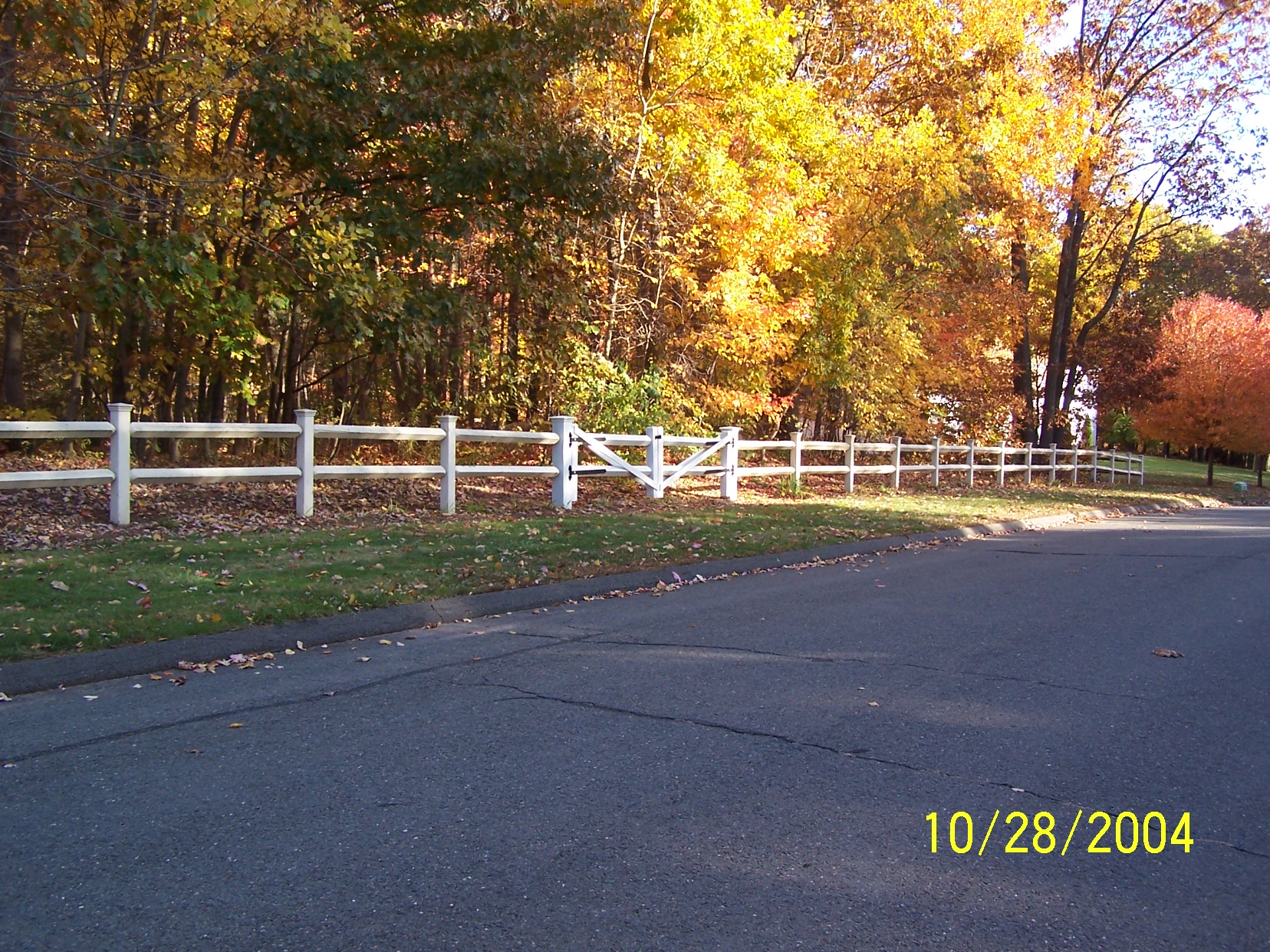
- Square estate rail: Sawn square rails and posts, crisp lines, the formal end of the family. This is the fence that lines driveways in Avon and Simsbury — equal parts boundary and architecture.
- Board fence: Flat boards nailed to posts, 3 or 4 rails high — the Kentucky horse-country look, and the strongest of the group for livestock.
All of them take welded wire mesh gracefully, which converts an open boundary fence into dog containment or wildlife defense without changing the look from the road.
What Horses Actually Require
Horse fencing is safety engineering, not decoration. The working rules we build to: 54 to 60 inches of height for riding horses, rails or boards on the inside of the posts so a leaning horse pushes rails against posts instead of popping them off, no gaps a hoof can pass through and get caught, and highly visible top rails — horses respect fences they can see. Board fence at 4 rails is the gold standard; round rail at 3–4 rails works well; anything involving loose wire a horse can’t see is a vet bill waiting to happen.
Gates for horse properties run wide — 12 feet minimum for paddock access if equipment ever enters, and latches need to be horse-proof, which is a real category: bored horses are gifted latch engineers. Our gate guide covers the hardware.
Local Expert Tip: Long Runs Live or Die on Layout
On estate and farm runs of several hundred feet, the craft is in the line — following grade so the rails flow with the land instead of stair-stepping awkwardly, keeping post spacing rhythm through dips, and setting corners and gate posts heavier than the line. That’s what your eye reads from the road, long before it counts rails.
Costs and the Long-Run Economics
Rail fencing is priced by the foot and driven by rail count and style: split rail is the budget anchor, round rail runs moderately more, square estate rail and 4-board fence sit at the top of the wood family. On long runs — and estate projects routinely run 400 to 1,000+ feet — per-foot differences compound fast, which is why we quote layouts with mixed styles: estate rail where the property faces the road, economical split rail where the line disappears into the woods. Same property, same look where it counts, meaningfully smaller number. Current ranges are in our Connecticut cost guide.
Cedar’s rot resistance and posts set below the 42–48 inch frost line are what separate a 25-year fence from a 10-year one — on a thousand-foot run, that difference is the whole project cost, again.
Fencing for Properties With Real Acreage
Arrow Fence Inc installs split rail, round rail, square estate rail, and board fencing across Farmington, Avon, Simsbury, Canton, Burlington, and Hartford County — long runs laid out to flow with the land, built for horses where horses live.