
Coastal Fence Materials Connecticut: What Survives Salt and Wind
A plain-English look at how salt air, wind and sandy soil treat aluminum, vinyl, cedar, rail and chain link along the eastern Connecticut shoreline and in Westerly and Watch Hill, Rhode Island.
Salt air does not care what a fence cost. On the eastern Connecticut shoreline and across the line in Westerly and Watch Hill, Rhode Island, the same fence that lasts decades a few miles inland can start to corrode, fade or loosen in a fraction of that time. This guide on coastal fence materials in Connecticut explains what salt, wind and sandy soil actually do to each material, so you can choose with your eyes open.
Arrow Fence builds cedar, vinyl, aluminum, rail and chain link fence for homes and businesses across Middlesex, New London and Windham counties and Westerly and Watch Hill, Rhode Island. We do not sell one material to every property, and on the water we will often tell you which one to skip.
In this guide
What the Shoreline Does to a Fence
- Salt spray. Salt in the air settles on every surface and speeds up corrosion of steel, scratched coatings and cheap hardware. The effect is strongest within a short distance of open water and on exposed points.
- Wind. Open shoreline lots get steady wind and stronger storm gusts. A solid fence acts like a sail, and the load goes straight into the posts.
- Sandy, wet soil. Coastal ground is often sand or fill over a high water table. Posts have less grip, and holes can fill with water as you dig.
- Sun and moisture cycles. Reflected light off water, then fog and rain, keeps wood and coatings working harder.
- Storm surge and flooding. Low properties can see water, debris and ice push against a fence.

Coastal Fence Materials Connecticut: Quick Comparison
| Material | Salt air | Wind | Best coastal use |
|---|---|---|---|
| Powder-coated aluminum | Does not rust. Coating can be scratched, so rinse and touch up | Open design sheds wind | Pool and view fencing |
| Vinyl (white or tan) | No rust or rot | Solid privacy panels catch wind | Low-maintenance privacy |
| Cedar privacy and picket | Weathers to gray; no rust, but needs care | Picket is more open than solid | Traditional shingle-style homes |
| Cedar or locust rail | Handles weather; wire mesh adds metal | Open, little wind load | Meadows, dune-adjacent boundaries |
| Coated chain link | Coating matters most; galvanized alone is the weak spot | Open, low wind load | Courts, public access, utility |
Nothing here is maintenance-free. The difference is what kind of upkeep you are signing up for.
Material by Material
Aluminum
Aluminum cannot rust, which is why it is a natural fit near salt water. Our powder-coated aluminum comes in flat-top, finial and puppy-picket styles and is pool-code compliant. The weak point is the finish: a deep scratch exposes bare metal, and salt can slowly pit it. A fresh water rinse a few times a year and a dab of touch-up paint keep it looking good. Read our aluminum styles and cost guide for the options.
Vinyl
Vinyl does not rust, rot or need painting, and salt air does not harm it. We install white and tan vinyl in privacy and picket styles. The tradeoff is wind: a six-foot solid vinyl privacy fence on an exposed shoreline lot is a big sail, and the posts have to be set accordingly. Our vinyl fence guide covers how it performs in Connecticut weather.
Cedar
Western red cedar is naturally rot-resistant and has long been used in coastal New England. Left alone it fades to silver gray, which many shoreline owners like. If you want to hold the color, plan on sealing it, and on shoreline lots you will likely seal more often. See our cedar maintenance guide. Picket is a good choice for wind because it lets air through.
Rail
Open post-and-rail in cedar or locust fits meadows, dune-edge lots and large waterfront parcels where you want a boundary, not a wall. Locust is the more rot-resistant of the two. See our rail options.
Chain link
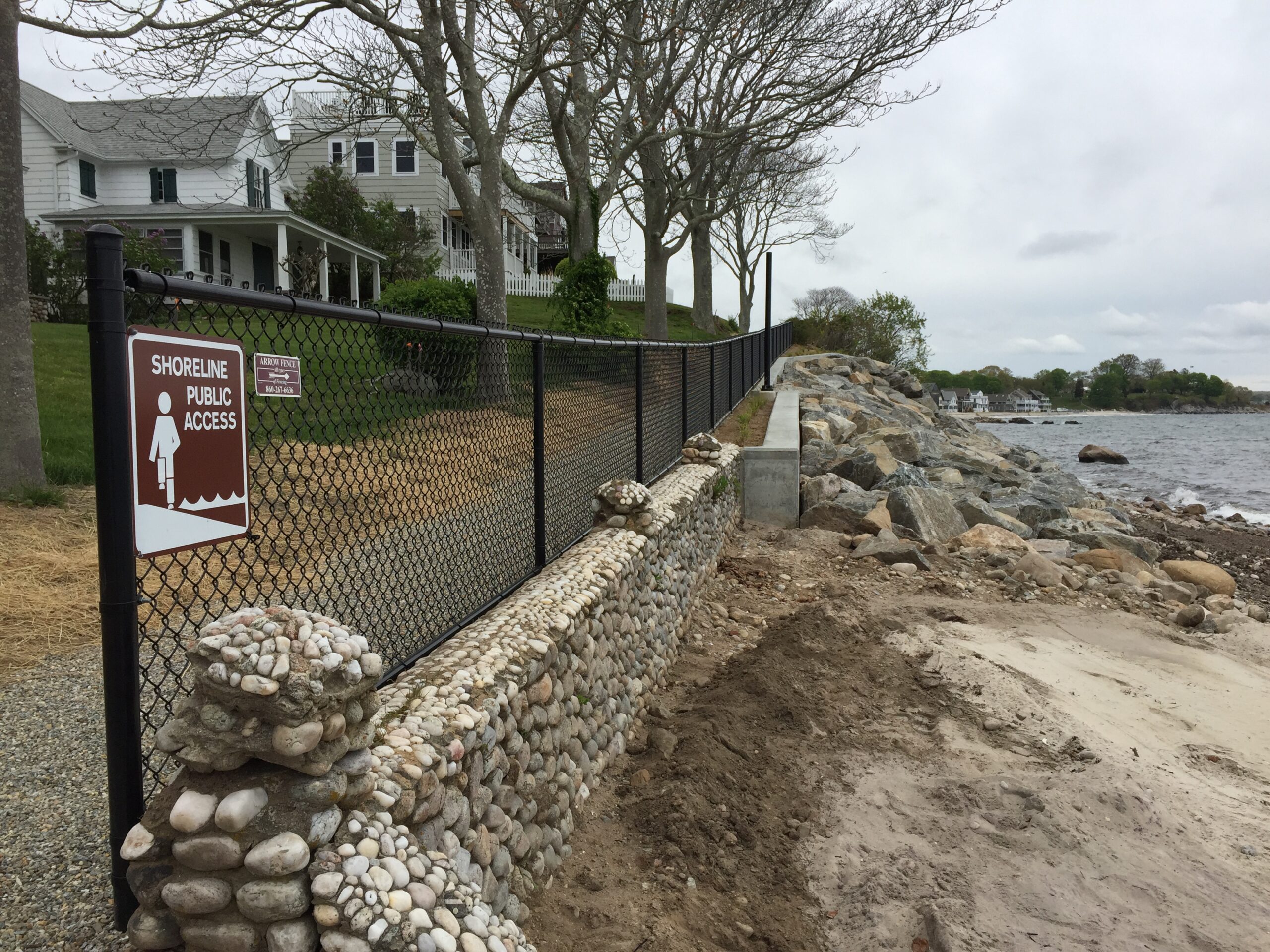
Chain link is open, so it takes little wind load, and black or green coated fabric looks better by the water than bare galvanized. It is the choice for courts, public shoreline access and utility sites. Salt will find any break in the coating, so ask what the fabric, posts and fittings are coated with. See our chain link options guide.
When wood is not the right choice: if a fence will sit in standing water, tidal flooding or constantly wet ground, wood at ground level will not last. Choose aluminum or vinyl, or set the fence back from the wettest ground.
Want a firm number for your property?
Hardware, Posts and Footings
Fasteners and gate hardware are where coastal fences fail first. Ordinary zinc screws rust, streak the fence and eventually let go. Ask for corrosion-resistant hardware, and ask what is used for hinges and latches. On sandy or wet soil, post depth and footing design matter more than the panel, so read how post depth and frost heave work in Connecticut. Solid fences on windy sites may need deeper or larger footings than the same fence inland.
Rules Before You Build Near the Water
Waterfront lots can carry extra review. In Connecticut, the state’s coastal program applies within the coastal boundary, and municipalities handle Coastal Site Plan Review for work landward of the coastal jurisdiction line, while DEEP regulates structures waterward of it. The DEEP coastal permit overview explains the split. Flood-zone and wetland rules may also apply. Whether a particular fence needs review is something your town land use office decides, so ask early. In Rhode Island, shoreline work can involve the Coastal Resources Management Council.
For permits in general, see our Connecticut fence permit guide. If you are fencing a pool, see pool fence regulations.
How to Decide
- How close is the water? The closer, the more you should favor aluminum, vinyl or well-coated materials.
- How exposed is the lot? Open points and bluffs favor open styles over solid panels.
- What does the soil do? Sand and a high water table call for deeper or better-designed footings.
- How much upkeep will you do? Rinsing is easy. Resealing every year is not for everyone.
- Does a rule apply? Check flood, coastal and wetland review before you order.
Pricing depends on footage, terrain, gates and material, and we quote after measuring. For general numbers, see our Connecticut fence cost guide. Our commercial team also handles shoreline associations and public access sites.
Coastal Fence Materials Connecticut: Common Questions
What is the best fence for salt air in Connecticut?
Powder-coated aluminum and vinyl are the two that never rust or rot, which makes them the usual picks near salt water. Cedar also performs well if you accept weathering or seal it. The right answer depends on privacy, wind and budget.
Does salt air damage vinyl fences?
No. Vinyl does not corrode, rot or need painting. Its weak point near the shore is wind: solid vinyl privacy panels catch gusts, so posts and footings must be set to match.
Will cedar last near the ocean?
Western red cedar is naturally rot-resistant and has a long history on New England shorelines. It will weather to gray unless sealed. Wood sitting in standing water will still fail, so keep the fence out of the wettest ground.
Can galvanized chain link be used by the water?
It can, but bare galvanized steel is the most exposed to salt. Black or green coated fabric and coated posts last better and look better. Ask about fittings and tension wire too.
Do I need a permit to fence waterfront property?
Possibly. Flood-zone, wetland and coastal site plan rules can apply, and your pool or zoning rules too. Ask your town land use office, and see our permit guide. In Rhode Island, ask the town and check whether CRMC rules apply.
Do you serve Westerly and Watch Hill, Rhode Island?
Yes. Westerly and Watch Hill are in our service area, along with New London, Windham, Tolland, Hartford and Middlesex counties in Connecticut. Call (860) 267-6636 to confirm your address.
Fencing a Shoreline Property?
We will look at the exposure, the soil and the rules that apply, then recommend the material that actually fits your lot. Estimates are free and come with no pressure.
CT Home Improvement Contractor Reg. HIC.0537503