
The Best Fence for Dogs in Connecticut: Height, Materials, and Real Costs
Invisible fences don’t stop other animals from coming in — and they don’t stop every dog from going out. Here’s how Connecticut homeowners choose a physical fence their dog can’t beat.
Fence height most dogs need, by size and breed
CT frost depth posts must beat to stay straight
Digging under — solved by mesh returns or barriers
Life of cedar and welded-wire dog fencing
Why Physical Fences Beat Invisible Ones for Most Dogs
Electronic containment has its fans, but the honest limits show up fast in Connecticut yards. A shock collar doesn’t stop a high-drive dog with a squirrel in view, doesn’t work when the battery dies or snow buries the wire, and — the part most owners learn the hard way — it does nothing to keep coyotes, loose dogs, and deer out. Connecticut’s coyote population is established in every county now, and a physical barrier protects in both directions.
A physical fence is also the only option that satisfies most town leash-law setups, boarding requirements, and some homeowner insurance carriers for certain breeds. It is a one-time build that works every day, in every weather, with no batteries, no collar, and no training period.
Matching the Fence to the Dog
There is no single “dog fence.” The right build depends on how your dog tries to leave.
- Jumpers (huskies, shepherds, athletic mixes): Go to 5 or 6 feet. A 4-foot fence is a suggestion to a determined jumper.
- Diggers (terriers, beagles, huskies again): The fence needs a below-grade defense — mesh returned into the ground, a gravel or stone base at the fence line, or pavers along the bottom edge.
- Chewers and leaners: Welded wire framed in cedar resists both; vinyl-coated wire protects mouths and lasts longer.
- Small dogs: The gap problem reverses — picket spacing and the gap under gates matter more than height. A 10-pound dog fits through openings a fence installer without dog experience never thinks about.
- Sight-reactive dogs: Solid board privacy fencing calms dogs that fence-fight or bark at everything that moves. Not seeing the trigger is often the whole fix.
The Workhorse Build: Cedar Rail with Welded Wire
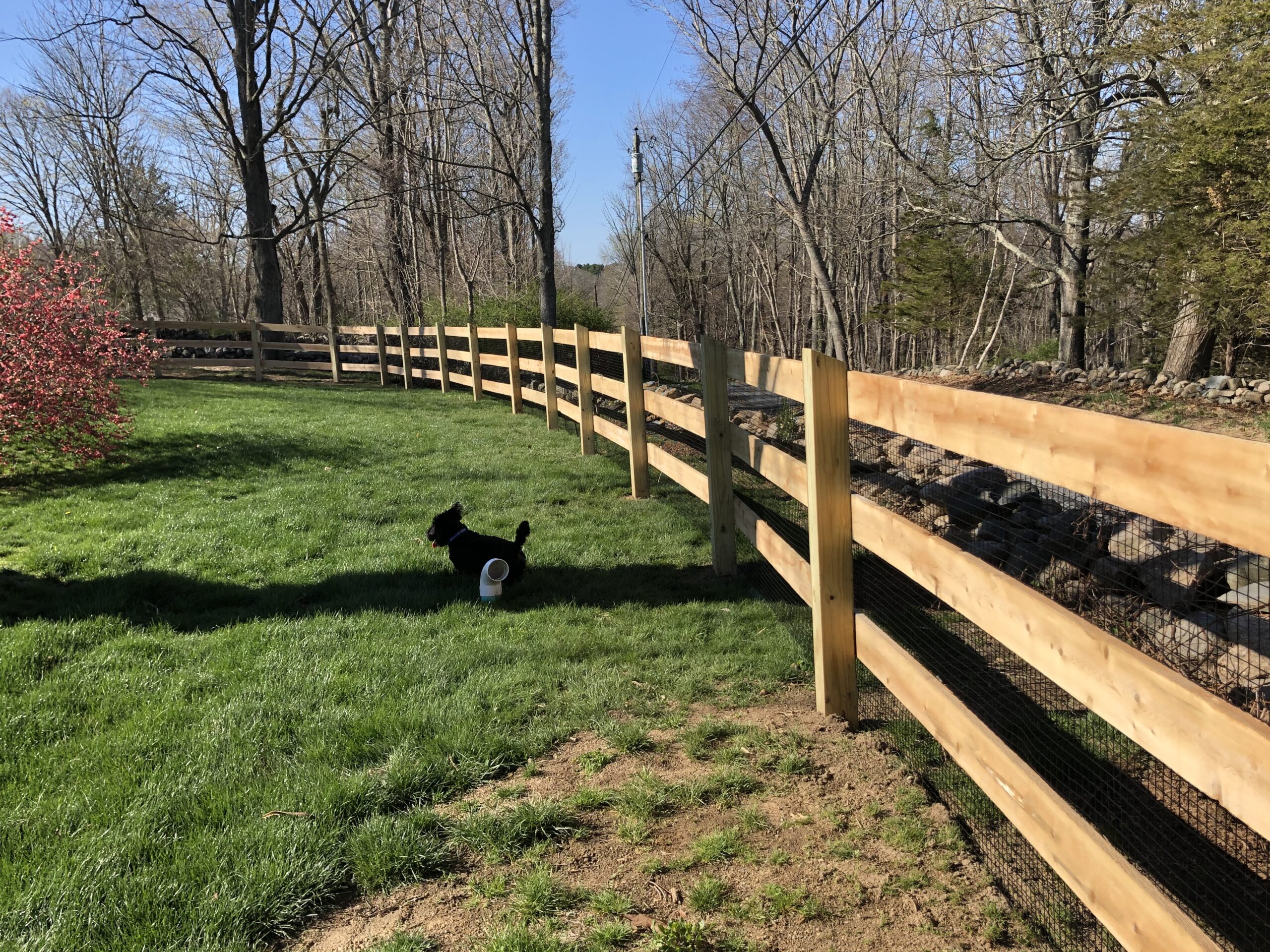
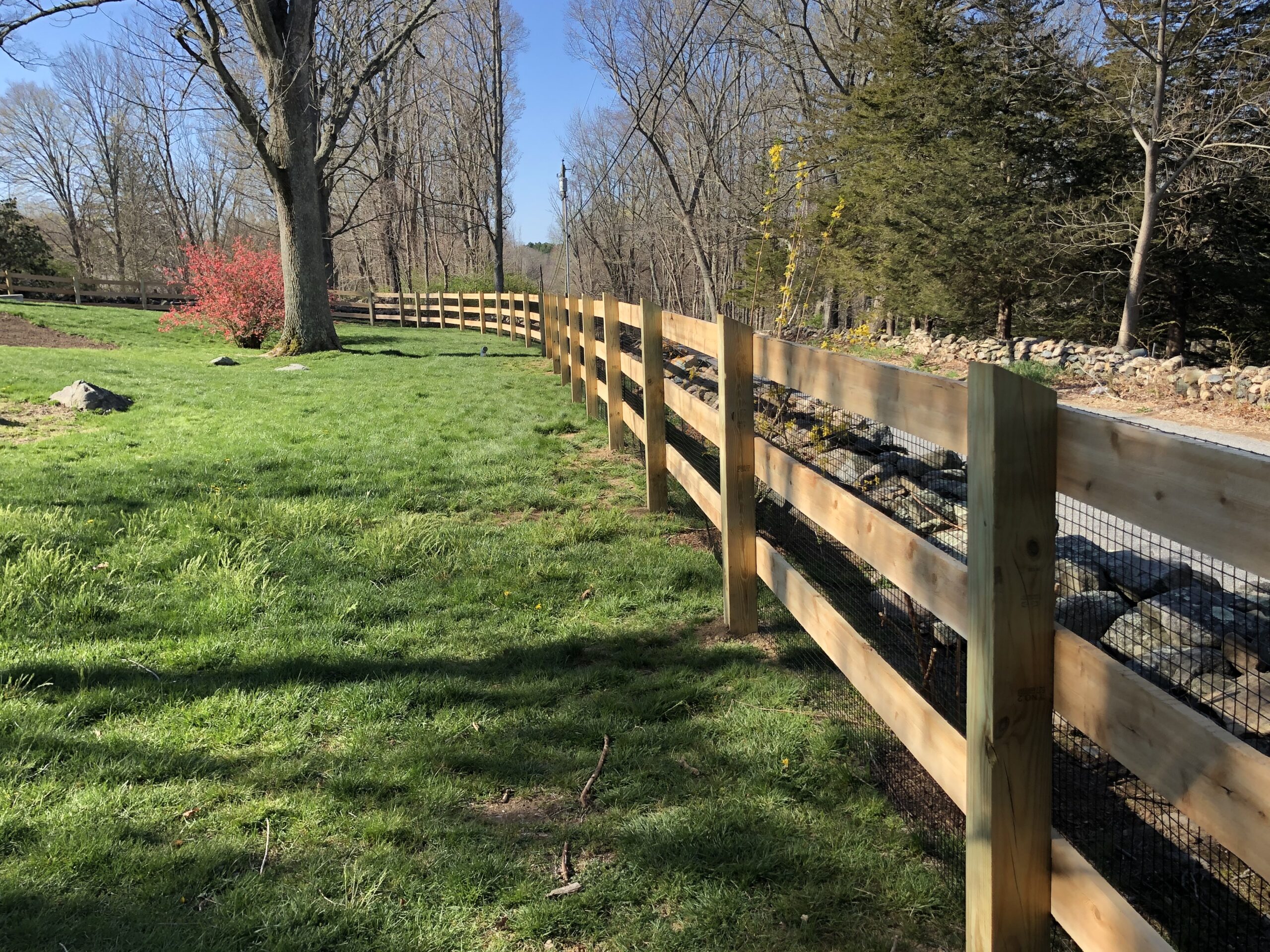
The most popular dog fence we install in Hartford County is a cedar post-and-rail fence with black welded-wire mesh fastened to the inside. It keeps the open, classic New England look — you see your yard, not a wall — while closing every gap a dog could use. Black mesh visually disappears from a few yards away.
It is also one of the most economical full-perimeter options, which matters because dog fencing is usually a whole-yard project. For stronger containment or bigger dogs, the same concept upgrades to a 4-rail fence at greater height, and for diggers we return the mesh below grade.
Cost reality: in Connecticut, cedar rail with wire typically lands well below a solid cedar privacy build for the same footage. Solid privacy fencing costs more but does double duty — dog containment plus screening. Chain-link remains the budget option and modern black chain-link is far less industrial-looking than the galvanized version most people picture. For specific per-foot numbers, see our Connecticut fence cost guide.
Local Expert Tip: Think About the Gate First
Nearly every dog escape we get called about happens at a gate — sagging until it doesn’t latch, a gap under it, or a latch a clever dog can nose open. Spend the extra on a self-closing hinge and a two-action latch, and make sure the gate bottom clearance matches your smallest dog, not your biggest.
Connecticut Details That Make or Break the Job
Posts must be set below the 42–48 inch frost line or the fence heaves out of line within a few winters — and a heaved fence opens gaps at the bottom exactly where a dog looks for them. Sloped yards need stepped or racked panels so the gap under the fence stays consistent; a fence that’s tight at the top of the hill and 8 inches off the grass at the bottom contains nothing. And if the fence sits on or near a property line, Connecticut’s division-fence rules apply — our fence permit guide covers what your town will want to see.
What About Deer and Wildlife?
If the goal is keeping wildlife out of a garden rather than keeping a dog in, the math changes — deer clear 6 feet without effort. Framed mesh garden enclosures at 7–8 feet solve that; it’s a different build we cover separately, and one we do often in Farmington Valley.
Ready to Build a Yard Your Dog Can’t Beat?
Arrow Fence Inc designs and installs dog fencing across Farmington, Canton, Avon, Simsbury, Burlington, and surrounding Hartford County towns — cedar rail with wire, privacy board, and chain-link, all set below the frost line with gates that actually latch.