
Fence Post Depth in Connecticut: Frost Heave, Concrete and What Holds a Fence Up
The part of a fence you cannot see decides how it looks in five years. Here is how Connecticut winters move posts, how deep they should go, and what to ask your installer.
Fence post depth in Connecticut is the decision that separates a fence that stays straight for twenty years from one that leans by its third spring. Panels, boards and finishes get the attention, but every fence is a wall of wind-catching surface hanging on posts, and the posts sit in ground that freezes, thaws, floods and shifts. This guide explains how frost heave works, how deep posts normally go, and the questions worth asking before you sign.
In this guide
- How frost heave moves a fence post
- How deep should fence posts be in Connecticut?
- Concrete, gravel or both
- What Connecticut ground does to posts
- Why gate posts fail first
- Signs of trouble, and what to do
- When more depth is not the answer
- Questions to ask your installer
- Fence post depth in Connecticut: common questions
- Want a fence that stays straight?
How frost heave moves a fence post
Soil holds water. When that water freezes it expands by roughly nine percent, and in soils with plenty of fine particles and moisture, ice can collect in layers and push the ground upward. Frozen soil also grips the sides of a post. As the frozen layer rises, it can carry the post with it, a bit at a time, through the winter. In spring the soil thaws and settles back around the post, but the post stays where it was lifted. After a few cycles you see it: a post sitting a few inches proud, a gate that will not latch, a panel that has rotated out of line.
Silt and fine sand that stay wet are the most prone to heave. Clean gravel and coarse sand drain and heave less. Much of the Connecticut River Valley has silty and clay-rich deposits left by an ancient glacial lake, while upland towns have stony glacial till and ledge. A single property can have both, so a soil that behaves in the front yard may not behave by the brook out back.

How deep should fence posts be in Connecticut?
The traditional rule of thumb is that about a third of the post’s length belongs underground. An 8 foot post under a 6 foot fence goes about 32 inches into the ground. Connecticut’s building code uses a frost depth of 42 inches for footings under houses and decks (see the Office of the State Building Inspector for current code and interpretations). Fences are not governed by the footing rules, but 42 inches is a useful reference for what the ground does.
The honest picture is that many well-built fences are not set to full frost depth. They stay put because the soil drains, because the fence is light, or because the posts are set well in the right material. Where the load is large, the answer changes.
| Fence type | What loads the posts | Depth thinking |
|---|---|---|
| Low picket, garden fence | Light wind load, small panels | Shallower can work if soil drains well |
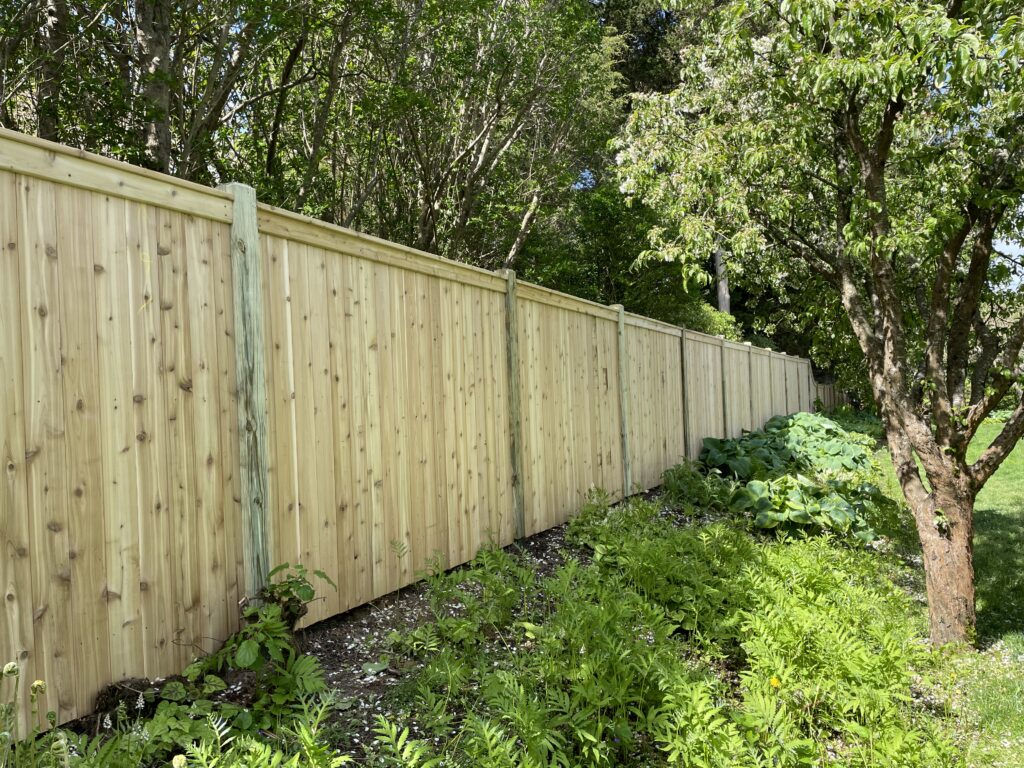
| 6 foot solid privacy | Wind acts like a sail on the whole run | At least a third of post length; deeper where soil is silty or the site is exposed |
| Gate posts, all fence types | Swinging weight pulls constantly on one post | The deepest and best-braced posts on the job |
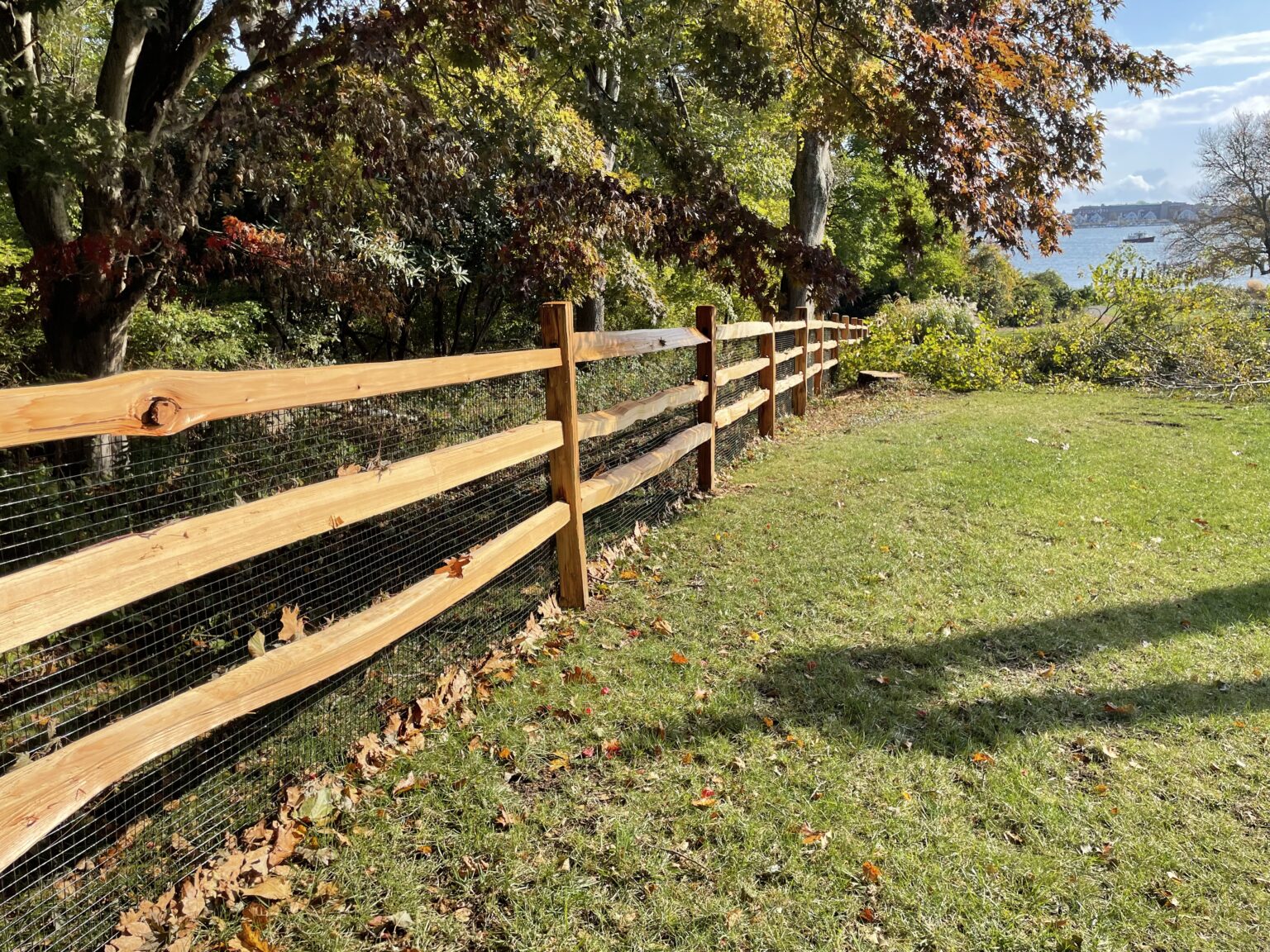
| Post and rail, farm and estate | Light panels but long spans and animal pressure | Sized to rail length and use |
| Chain link, tall and court fence | Tensioned fabric pulls on end and corner posts | Heavier posts and deeper footings at corners and ends |
These are general guidelines, not a specification for your property. We set depth by job: fence height, wind exposure, soil, slope and gates. Ask any contractor for the number in writing.
Concrete, gravel or both
There are three common ways to set a post, and each has a place.
- Concrete collar: the standard for tall privacy fences, gate posts and tensioned chain link. It resists wind and gate loads. Done well, the top is crowned so water runs away from the post, and there is drainage under or beside it.
- Gravel or crushed stone, tamped in layers: drains well and avoids trapping water against wood. It gives less resistance to sideways load and suits lighter fences.
- Stone base with concrete above: a layer of crushed stone under the post lets water drain, with concrete around it for strength. It is a common compromise.
Whatever the method, the post itself should be rated for ground contact. Pressure-treated wood and naturally durable species such as locust hold up in the ground, and we cover the options for post-and-rail fences in western red cedar and locust. Posts in wet ground fail from the bottom first, so how the hole drains matters as much as the depth.
Want a firm number for your property?
What Connecticut ground does to posts
Ledge and stone
West of the Connecticut River and up through the central and eastern hills, bedrock is often close to the surface and glacial till is full of cobbles. A post cannot always go as deep as planned. A good crew finds this out early, probes before it digs, and has a plan for a post that hits ledge.
Wet and flat ground
River valley parcels and low spots can stay saturated into spring. For these sites, drainage at the post base, post material and sometimes a different fence material, such as vinyl or aluminum, are worth discussing.
Fill and new construction
Soil that was moved or backfilled around a new house settles for years. Posts set in loose fill can sink and tilt. Ask your installer how they handle it.
Slopes
On a slope, panels step down and posts bear more side load. Spacing and depth may need to change. Our crews work with steep and uneven ground regularly.
Why gate posts fail first
A gate is a heavy panel hanging off one post and swinging on a hinge. Every use pulls the post sideways, and wet ground and frost make it worse. If one post on your property is going to lean, it is the gate post. They should be the deepest, the best braced and, for wide gates, set in concrete with the hardware sized to match. We go into hinges, latches and spans in our fence gate guide.
Signs of trouble, and what to do
- A post that stands higher out of the ground than its neighbors in spring.
- A gate that rubs, drops or will not latch after the frost leaves.
- Gaps opening under panels or boards.
- Posts that move when you push them, or a soft, dark base.
Do not hammer a heaved post back down. It will lift again. A single lifted post can often be reset in better-drained backfill, and a stretch of leaning posts may mean the whole fence needs a different approach. Our repair vs replacement guide and cedar fence winter maintenance post explain what to look for each spring.
When more depth is not the answer
Deeper posts do not fix every problem. A fence leaning because of tree roots, washout from a downspout, a fence built over a buried obstruction, or posts rotted at the base will keep failing whatever the depth. Sometimes the right answer is to fix drainage first, move the line, or choose a lighter fence. For a tall court or sports fence, which takes the largest loads of all, see our tennis court fence guide.
Questions to ask your installer
- How deep will line posts and gate posts be set, in inches, for this fence?
- Is the post rated for ground contact, and how is the hole drained?
- What happens if you hit ledge or a large stone?
- Who calls 811, and when?
- How do you set and brace the gate posts?
More ideas are in our guides to what to ask your fence contractor and cedar privacy fences. Before any digging, call 811 so buried lines are marked.
Fence post depth in Connecticut: common questions
How deep should fence posts be in Connecticut?
The traditional minimum is about one third of the post’s total length underground, so a 6 foot privacy fence on 8 foot posts has roughly 32 inches in the ground. Connecticut’s frost depth for house footings is commonly given as 42 inches, and heavy or tall fences, and especially gate posts, do best when they come close to it. Soil, slope, ledge and the weight and wind load of the fence all change the answer, which is why we decide depth on site.
What is frost heave and how does it affect a fence?
Water in the soil freezes and expands, and frozen soil can grip a post and lift it as the ground rises. When the ground thaws, the soil settles around and under the post but the post does not drop back down. Repeated over several winters, a heaved post leans, rises out of line, or pulls a gate out of square.
Is concrete or gravel better for setting fence posts?
Neither wins everywhere. Concrete resists wind and gate loads and is the usual choice for tall privacy fences and gate posts. Gravel backfill drains well and suits lighter fences. The details matter more than the material: concrete should be sloped away from the post so water does not sit against it, and the hole should drain.
Why does my fence lean after winter?
Frost heave is one cause, but not the only one. Shallow posts, saturated soil, a poorly braced gate, tree roots, snow load and rotted post bottoms can all do it. Look at whether the post has risen out of the ground, whether the base is soft, and whether the fence leans against the wind. Our repair vs replacement guide can help you judge the next step.
Can a heaved fence post be fixed without replacing the fence?
Sometimes. A single post that has lifted can often be reset, and a section can be re-leveled. If posts are rotted, shallow throughout, or the fence has racked out of square, resetting every post costs nearly as much as new work. We can look at it and tell you which case you have.
How do I know where utilities are before posts go in?
Call 811 before anyone digs. Posts, especially deep ones, can hit buried lines, and it is free to have them marked. See how we handle site prep on our Middletown fence contractor page.
Want a fence that stays straight?
We will walk your property, look at the soil, the slope and the gates, and quote the fence with the post depth written down. Fabricated in our East Hampton shop and installed by our own crews.
CT Home Improvement Contractor Reg. HIC.0537503