
Fence on Property Line in Connecticut: Surveys, Neighbors and the Spite Fence Law
Where the fence goes matters as much as what it is made of. Here is how to find your line, what Connecticut statutes say about shared fences and spite fences, and how to keep the neighbors on your side.
Putting a fence on the property line in Connecticut sounds simple until two neighbors disagree about where the line actually is. Most fence disputes are not about the fence. They are about a boundary nobody had checked, a cost nobody agreed on, or a conversation that never happened. This guide covers what to settle before the first post goes in. It is general information and not legal advice; for a dispute, talk to a Connecticut real estate attorney and a licensed land surveyor.
In this guide
- Step one: know where the line is
- On the line, or a few inches inside?
- What Connecticut law says about shared fences
- The spite fence law
- Talk to the neighbor first
- Easements, setbacks and other surprises
- Long-standing fences and adverse possession
- When building on or near the line is not the right choice
- A short checklist before the crew arrives
- Fence on property line in Connecticut: common questions
- Plan the fence before the posts go in
Step one: know where the line is
Do not trust a fence line, a hedge, a stone wall or a neighbor’s memory. The line is whatever your deed and a survey say it is. Online parcel maps and the assessor’s sketch are useful for orientation but are not legal boundary surveys.
- Look for your closing survey. If you bought the house with a mortgage, a survey may be in your closing papers. Check whether it shows pins or monuments, and whether it is recent.
- Look for pins. Iron pins and stone or concrete monuments mark corners. They can be buried, moved by earlier work or missing.
- Hire a licensed Connecticut land surveyor if anything is unclear, if you are fencing close to the line, or if the neighbor disagrees. It is a small cost compared with moving a fence.
Arrow Fence builds the fence along the line you or your surveyor identify. We are not land surveyors, and we do not decide legal boundaries. If the line is in doubt, we will ask you to get it marked before we set posts.
On the line, or a few inches inside?
There are two common choices, and neither is right for every yard.
| Option | Why people choose it | What to watch |
|---|---|---|
| Exactly on the line | Uses every inch of your lot, and it can read as a shared boundary | If the line is off by even a little, part of the fence sits on your neighbor’s land. Who owns and maintains it can become a question |
| Inside the line on your side | The fence is clearly yours, and posts and footings are fully on your property | You give up a strip of land, and you need to maintain the gap behind the fence |
| Shared fence by agreement | Cost and upkeep are split, and both sides get a fence | Needs a written agreement that survives a sale of either property |
Zoning can overrule your preference. Towns set fence heights, and some require fences to sit a minimum distance back, particularly from streets and on corner lots. For instance, Middletown’s zoning FAQ limits a front-yard fence to two and a half feet and allows up to six feet along side and rear boundaries. See our Middletown fence page and our fence permit guide for how to check your own town.
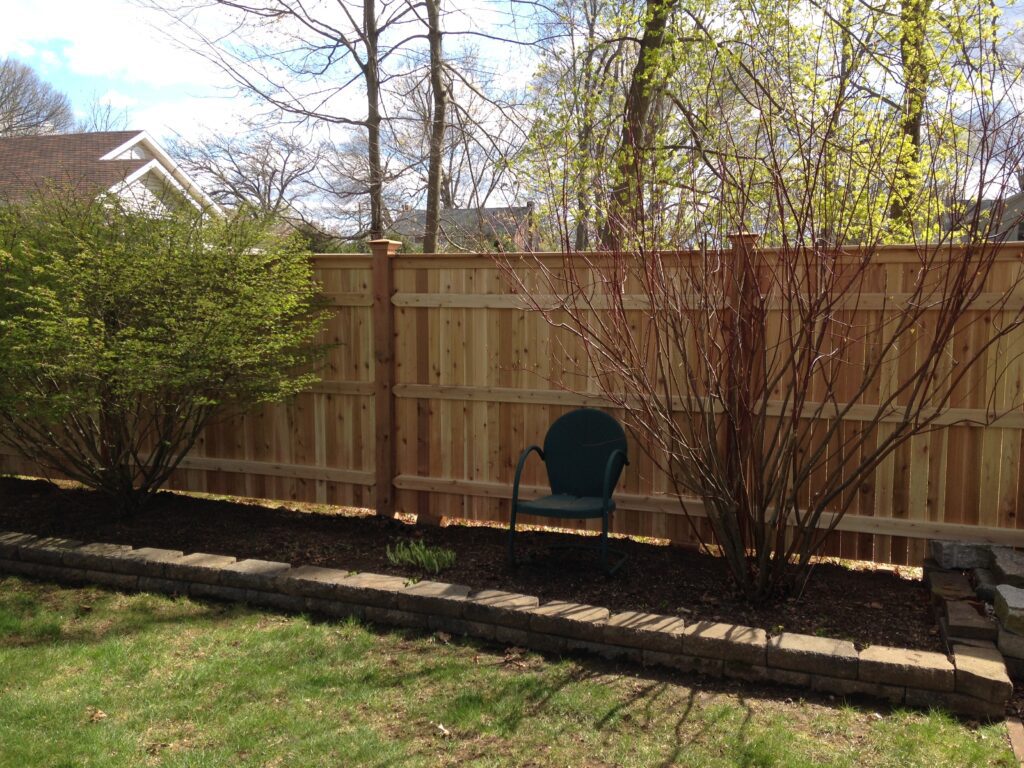
What Connecticut law says about shared fences
Connecticut has a set of old fence statutes in Chapter 823 of the General Statutes. They date from a time when fences kept livestock in, and they read that way. Three things worth knowing:
- If neighbors cannot agree how to divide a fence between their properties, either one may call on the town’s selectmen, who can set out each owner’s share (Sections 47-49 and 47-50).
- If someone neglects to keep a division fence in repair, the other owner can ask the selectmen to view it. If nothing is done after written notice, the aggrieved owner may make the repairs and recover double the cost as estimated in writing by the selectmen, along with their fees (Section 47-51).
- Barbed wire is restricted between adjoining properties without the neighbor’s written consent, with exceptions for properties used for livestock (Section 47-47).
In practice, few suburban neighbors use these procedures. They matter mostly as background: they show that shared fences have a legal framework, and that a written agreement between neighbors is better than relying on it.
Want a firm number for your property?
The spite fence law
Connecticut’s spite fence law is Section 52-570, in Chapter 925 of the General Statutes. It allows the owner of land to bring an action against an adjacent owner who maliciously erects a structure with the intent to annoy or injure the plaintiff in the use or disposition of his or her land. The word that carries the weight is malice. Courts look at why a structure was built. A tall solid fence put up for privacy, to protect children or dogs, or to screen a view, has a legitimate purpose, which is different from a wall built only to block a neighbor’s windows.
You can reduce the risk of a dispute by being able to say why you chose the height and style, by staying within local limits, and by telling the neighbor before the work starts.
Talk to the neighbor first
A five-minute conversation is the cheapest fence insurance. Tell them what you plan, where it will sit, how tall, which material and which side the finished face will be on, and when the crew is coming. Agree in writing on anything that matters: sharing the cost, who maintains which side, access to cut back plants. If your neighbor wants to share the cost, put the agreement on paper and keep it with your deed documents.
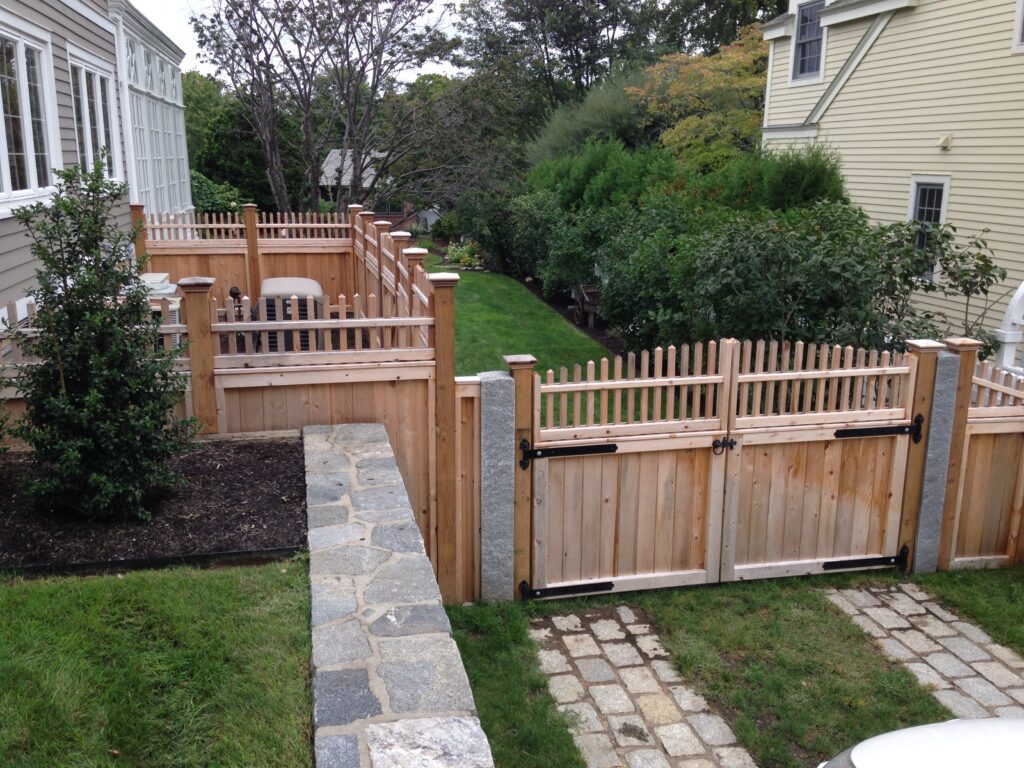
Easements, setbacks and other surprises
- Easements. Utility, drainage and access easements may cross your lot. A fence inside an easement can be removed at your expense if the utility needs access. Your survey or deed will show them.
- Underground utilities. Call 811 before digging. Our guide to fence post depth and frost heave explains why depth matters, and why you should know what is buried first.
- Pools. Pool barriers have their own rules and are not the same as a property fence. See our pool fence regulations post.
Long-standing fences and adverse possession
A fence does not move the legal line. But a fence that has stood in the same place for many years can matter if someone later claims land by use. Connecticut recognizes adverse possession claims after a long statutory period, generally fifteen years of open, hostile and continuous use. That is a reason not to build on an assumption, and a reason to keep records. If a deed line and an old fence line disagree, get a survey and talk to an attorney before you replace anything.
When building on or near the line is not the right choice
Sometimes the best move is not to build there. If the boundary is in dispute, wait for the survey. If the line runs through a drainage swale, a stream bank or a utility easement, fence a few feet inside it. If your goal is only to keep a dog in, a fence around the part of the yard you use may cost far less than the whole perimeter. And if the neighbor will be hurt by a tall solid fence, a lower picket or a combination of fence and planting may do the job and avoid a fight.
A short checklist before the crew arrives
- Confirm the line with a survey or a clearly located pins.
- Check your town’s height, setback and permit rules.
- Talk to the neighbor and agree on style, side and cost-sharing in writing.
- Call 811 before digging.
- Ask your contractor to write the fence location, height and material on the quote. Our guide on what to ask your fence contractor has more questions.
Fence on property line in Connecticut: common questions
Can I build a fence right on the property line in Connecticut?
Often you can, but it is not always wise. A fence exactly on the line can become a shared fence, with arguments over who maintains it, and any error in where the line really is puts part of it on the neighbor’s land. Many owners set the fence a few inches inside their own side. Zoning may also set a required setback for fences, so check with your town first.
Do I need a survey before I put up a fence?
If you are not certain where the line is, yes. Boundary pins can be missing, moved or mislocated, and tax maps and online parcel viewers are not legal surveys. A licensed Connecticut land surveyor can mark the line. Arrow Fence builds where you or your surveyor mark the boundary; we are not surveyors and do not decide legal boundaries.
What is Connecticut’s spite fence law?
Connecticut General Statutes Section 52-570 lets a landowner bring an action against an adjacent owner who maliciously erects a structure on his or her land with intent to annoy or injure the neighbor in the use or disposition of the land. The key word is malice. A fence built for ordinary reasons such as privacy, safety, or keeping children and pets in is a different matter. This is a general summary, not legal advice.
Who pays for a fence between two properties in Connecticut?
There is no rule that neighbors must split the cost of a new fence. Connecticut’s old fence statutes in Chapter 823 do address division fences, including a process in which town selectmen can divide a fence between adjoining owners or order repair of one that has been neglected. Most neighbors agree on cost and upkeep in writing instead. Talk to an attorney if you are considering using the statutes.
Which side of the fence should face the neighbor?
Connecticut has no statute we know of that says. Many installers face the finished side outward as a courtesy, but it depends on the fence style and what you and your neighbor agree. It is worth deciding in advance and putting it in your quote.
Does a long-standing fence change the property line?
Not by itself. A fence in the wrong place does not move the legal line, but a fence that has stood for many years can become part of a dispute about use and possession, and Connecticut recognizes adverse possession claims after a long statutory period. If a fence line and a deed line disagree, get a survey and speak with a real estate attorney.
Plan the fence before the posts go in
We will walk the line with you, talk through height, style and gates, and give you a written quote. Fabricated in our East Hampton shop and installed by our own crews.
CT Home Improvement Contractor Reg. HIC.0537503