
HOA Community Fencing in Connecticut: A Guide for Boards and Owners
HOA community fencing comes down to two things: getting approval and picking a material your community will still like in ten years. Here is how homeowners and boards in Connecticut can handle both.
HOA community fencing is a project with two kinds of readers. If you are a homeowner in an association, your question is whether you are allowed to build a fence and what the board will approve. If you sit on the board or manage the property, your question is how to fence a pool, a dumpster pad, a playground or an entrance without spending the reserve on the wrong material. Arrow Fence works with both. This guide covers each side, with the honest caveats.
In this guide
- Rules Come From Your Documents, Not a Single Statute
- For Homeowners: Getting an HOA Fence Approved
- HOA Community Fencing Options That Hold Up
- For Boards and Property Managers
- Pool, Playground and Entrance Fencing Priorities
- Utilities, Access and Phasing
- HOA Fencing FAQ
- Fencing for a Community or HOA?
Rules Come From Your Documents, Not a Single Statute
Connecticut’s Common Interest Ownership Act (Chapter 828 of the General Statutes) sets the framework for many condominiums and planned communities, including how associations are organized and how rules are adopted. You can read the statute on the Connecticut General Assembly site. But what a fence must look like in your community is almost always decided by the association’s own declaration, bylaws, rules and architectural guidelines. Older communities may be governed differently, and not every neighborhood has an association at all. We are not lawyers, so treat this as orientation and read your documents.
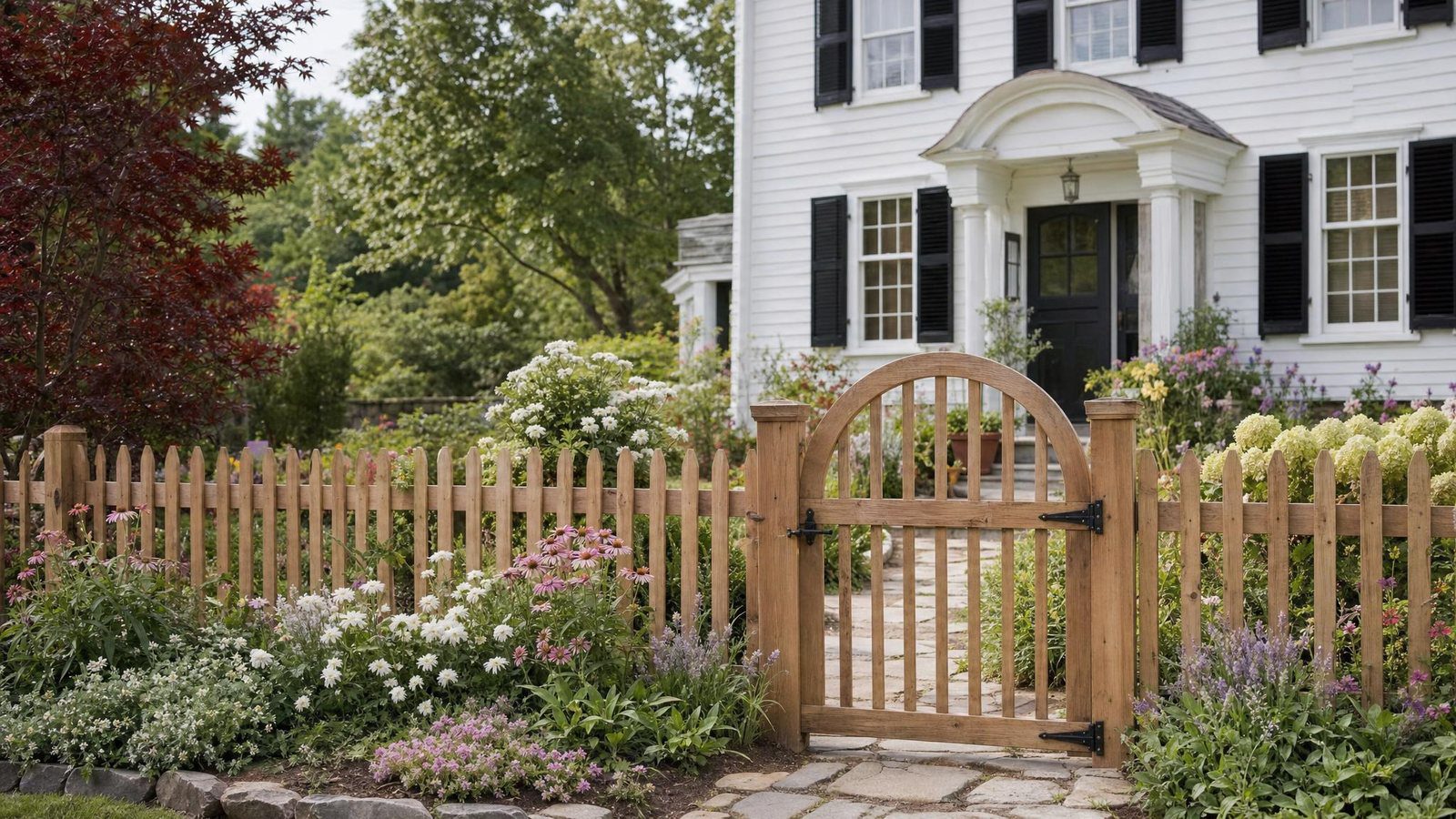
For Homeowners: Getting an HOA Fence Approved
- Read the guidelines first. Look for allowed materials, heights, colors, setbacks from the street, and rules for pool enclosures and gates.
- Get a survey or plot plan. Boards and towns both want to see exactly where the fence goes. Our guide to fence permits in Connecticut covers the town side.
- Submit a clear application. Include a sketch with footage and height, the material and color, and the gate locations. Photos of similar fences help.
- Wait for written approval. Do not build on a verbal yes. Approval can take a board meeting cycle.
- Still check the town. HOA approval does not replace zoning or building rules. Pools have their own requirements, covered in our pool fence regulations guide.
Associations commonly favor fences that look consistent from the street: aluminum, vinyl in white or tan, and cedar with a defined stain color. Chain link is often limited to back-of-lot or utility areas. This varies by community, so ask for the guidelines before you design anything.
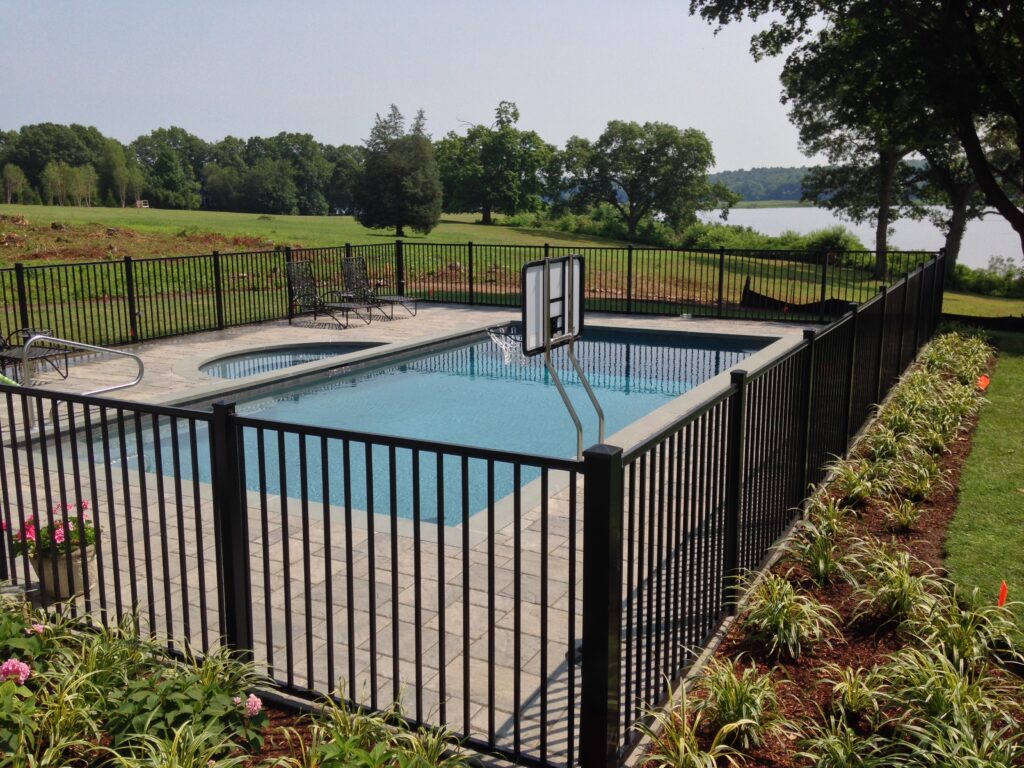
HOA Community Fencing Options That Hold Up
| Material | Where it fits in a community | Watch for |
|---|---|---|
| Powder-coated aluminum | Pool areas, entrances, frontage, play areas | Higher up-front cost than chain link; built for pool-code spacing |
| Vinyl privacy or picket (white, tan) | Dumpster and equipment screening, lot lines | Only two colors; check whether the board allows them |
| Cedar | Gates, entrance walls, screening that matches the architecture | Needs a stain decision and periodic care |
| Chain link | Utility areas, retention ponds, back boundaries | Appearance rules; vinyl-coated looks better than bare galvanized |
| Post and rail | Open space, trail edges, conservation boundaries | Does not contain small children or pets without mesh |
Want a firm number for your property?
For Boards and Property Managers
Common areas create common-sense priorities. A pool fence has to pass inspection and keep children out. A dumpster enclosure has to hide the pad and survive being hit by a truck. A retention pond or utility area needs a durable, low-cost barrier. Entrances should reflect the community’s character and need little upkeep. Our commercial fencing page lists the sectors we serve, including HOA communities.
Scope the project before you ask for bids
Write down what each fence has to do, how long it is, where the gates go, who needs access (residents, trash trucks, emergency vehicles) and what must be removed. Bids built on the same scope are easy to compare. Bids built on different assumptions are not.
Compare what is behind the bid
Ask for a written scope with materials and heights, proof of insurance, who actually does the installation, and how gates and hardware are specified. Arrow’s installations are done by our own crews, not subcontractors, and we can provide certificates of insurance to your management company. Our guides on what to ask your fence contractor and vetting a fence company work for boards too.
Think about total cost over time
A lower-cost fence that needs staining, painting or replacement every few years can cost a community more than a material that costs more at the start. That is a budget conversation for your reserve study, not a fixed rule. Pricing depends on footage, terrain, gates and site access, and we quote after measuring. For a general reference, see our Hartford County cost guide.
If your community has no written fence guidelines, or the board is split, do not hire a contractor yet. Settle the standard first, so owners get consistent answers. And if one failing section is the whole problem, a repair may beat a full replacement, as explained in our repair vs. replacement guide.
Pool, Playground and Entrance Fencing Priorities
Three areas come up again and again. At a community pool, the barrier, the self-closing and self-latching gate, and inspection come first, and appearance second. At a playground, visibility matters, so open aluminum picket lets adults see in while keeping balls and small children contained. At an entrance, the fence is a first impression, which is where a more decorative aluminum style or a stained cedar feature earns its cost. Decide which of these your community values most, and you will make the material choice quickly.
Utilities, Access and Phasing
Communities often have shared utilities, irrigation and easements that individual lots do not, so have the markout done before digging (see Click Before You Dig). Plan access for the install crew and for residents. Large jobs can be phased by area, such as pool first and perimeter later, if the budget calls for it. Gate placement deserves attention too; our gate guide covers the options. Our financing page is for homeowners; associations should ask us about their own options.
Fencing a community in the Farmington Valley? See our Granby and East Granby page for how we work there, and our privacy fence styles guide for screening options.
HOA Fencing FAQ
Do I need HOA approval to build a fence in Connecticut?
If your community has an association, usually yes. The declaration, bylaws or architectural guidelines normally require approval before you build. Check your documents, and still comply with town zoning and building rules.
What fence materials do most HOAs allow?
It varies, but aluminum, vinyl and stained cedar are commonly accepted for visible areas, while chain link is often limited to utility or rear areas. Ask for your guidelines.
Can Arrow Fence work with an HOA board or property manager?
Yes. Arrow installs fencing for HOA communities, using its own crews, and can provide certificates of insurance to property management companies. We visit the site and give a written proposal.
What fence is best for an HOA pool?
Powder-coated aluminum is a common choice because its picket spacing is built for pool-code compliance and it needs little maintenance. Gates must self-close and self-latch, and the layout must pass inspection.
Does HOA approval replace a town permit?
No. They are separate. A pool needs a building permit in most towns, and zoning can limit height and placement. Read our guide to fence permits in Connecticut.
How should an HOA compare fence bids?
Give each contractor the same written scope, and compare materials, installation method, insurance, gate hardware and who does the work. A low bid that leaves out gates or removal is not really lower.
Fencing for a Community or HOA?
Arrow Fence installs pool, entrance, screening and perimeter fencing for HOA communities with our own in-house crews. Send us your scope and we will visit, measure and write a clear proposal.
CT Home Improvement Contractor Reg. HIC.0537503