
Municipal Fencing Connecticut: Schools, Parks and Public Property
How to choose, specify and buy fence for school grounds, parks and town property in Connecticut, from playground safety details to ADA gate widths and what to put in a quote request.
Municipal fencing in Connecticut is not the same job as a backyard fence. A fence around a town park is a different product. It has to survive mowers, plows and teenagers, protect people who are not the owner, and meet accessibility rules that a homeowner never thinks about. This guide covers how to match fence type to the site, which details matter most in public places, and what to expect when a project goes through a public purchasing process.
Arrow Fence installs commercial fencing of all types for municipalities, schools, parks and other public customers, using our own in-house crews. We have been doing it since 1979.
In this guide
- Why Public Fencing Is Different
- Matching the Fence to the Site
- School and Playground Fencing: Safety Details
- Gates and Accessibility
- Municipal Fencing Connecticut: How Public Projects Are Bought
- Material Choices for Long Service Life
- Municipal Fencing Connecticut: Common Questions
- Planning a School, Park or Municipal Fence?
Why Public Fencing Is Different
Three things change when the owner is a town, a school district or a park department:
- The users are the public. Children, seniors, people with mobility aids and people who will test the fence. Every edge, gap and latch is a liability question.
- Maintenance is limited. Public works crews are stretched. A fence that needs staining every other year is a poor fit; one that needs a mower pass and an annual look is a good one.
- The decision is documented. Specifications, budgets and sometimes competing quotes mean you need a clear written scope instead of a verbal handshake.
Matching the Fence to the Site
There is no single best fence for public property. The table below shows the pairings we see most often. Heights are common ranges, not code. Your design professional, insurer or the governing standard sets the final number.
| Site | Common fence | Why | Watch for |
|---|---|---|---|
| Athletic fields and courts | Black or green coated chain link | Open, tough, handles ball impact | Height and post size for sport use. See our court fencing guide |
| School perimeter | Chain link or aluminum | Visibility for supervision, durable | Gate hardware; climbable patterns |
| Playgrounds | Aluminum or coated chain link | Contains children, clear sightlines | Self-closing, self-latching gates; no pinch points |
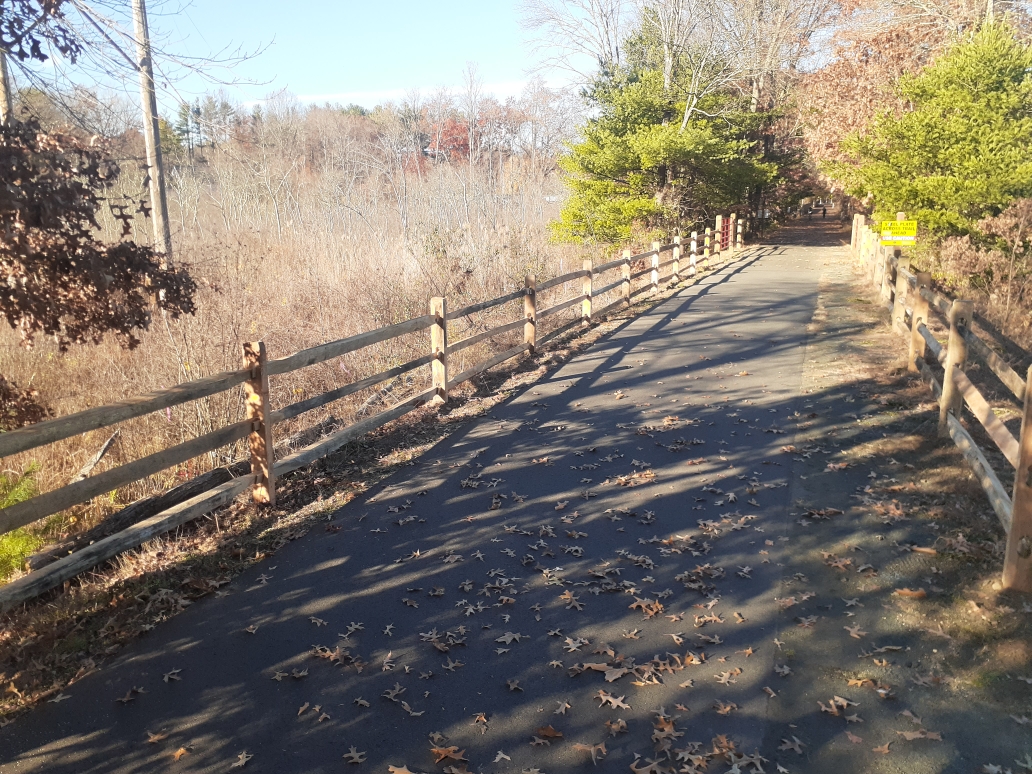
| Trails and open parks | Post-and-rail | Marks a boundary without walling it off | Not a barrier on its own. See rail fencing |
| Town greens, cemeteries, entrances | Powder-coated aluminum | Formal look, no painting | Not for privacy. See aluminum |
| Public works yards, utilities | Galvanized chain link with security details | Cost-effective, hard to damage | Our security fencing guide covers add-ons |
School and Playground Fencing: Safety Details
For schools and playgrounds, the details do more work than the height. Ask for these in the specification:
- Smooth top edges. On chain link, a knuckled top selvage avoids sharp wire ends at a child’s reach. Bare twisted barbs belong on industrial yards, not school grounds.
- Tight bottom line. Gaps under a fence let small children slip out and animals in. Grade changes need careful fabric fitting.
- Few footholds. Horizontal rails on the child-facing side make a ladder. Put the rails on the outside or pick a style without them.
- Self-closing, self-latching gates. Latches should be out of a young child’s reach but still usable by staff.
- Room for equipment. Mowers, plow blades and maintenance trucks need a wide, clear gate and a post that will not get bent every winter.
The U.S. Consumer Product Safety Commission publishes a Public Playground Safety Handbook that covers playground layout and the role of fencing and gates. Treat it as a reference alongside your insurer’s requirements.
Want a firm number for your property?
Gates and Accessibility
Gates on a public route are covered by the same accessibility rules as doors. The federal ADA Standards require a minimum 32 inches of clear width, measured with the gate open to 90 degrees, and set hardware at 34 to 48 inches above the ground, operable with one hand and without tight grasping or twisting. Maneuvering clearance on each side also matters. You can read the details on the U.S. Access Board gate and door guide.
These are federal numbers, and your project may have more detailed requirements. A gate that is only 32 inches wide may also be a poor choice for emergency vehicles and maintenance equipment, so many sites need a pedestrian gate and a separate drive gate. Our fence gate guide explains widths, swing and hardware.
When a fence is not the right answer: fencing every edge of a public space can cut off access, trap snow and block sightlines. If the goal is to keep cars off a lawn or path, bollards or landscaping may do the job better. If the goal is to keep people out of a hazard, a gate that is always locked and clearly signed beats a tall fence people climb.

Municipal Fencing Connecticut: How Public Projects Are Bought
We describe this only in general terms, because every town, school district and agency has its own rules. Public projects over a certain size are commonly purchased through a written specification, competing quotes or a formal bid. Procurement rules and dollar thresholds come from your purchasing office, finance director or town attorney, not from the contractor.
What helps on any public job:
- Write the scope in plain terms. Footage, height, fence type, coating color, number and width of gates, and where the fence ties into existing fence or walls.
- Call for a utility markout before design is final. See our guide to what to do before the crew arrives.
- Ask for a site walk. Slopes, ledge, drainage and access change the real cost more than the fence itself.
- Ask what is and is not included. Removal of old fence, restoration of lawn and disposal should be written down.
- Compare like with like. Posts, gauge, coating and gate hardware differ between quotes that look similar.
If you send us a specification or site details, we will tell you honestly whether and how we can quote it. For rules on permits and approvals, see our Connecticut fence permit guide. Pricing depends on footage, terrain, gates and material, and Arrow quotes after measuring.
Material Choices for Long Service Life
Public fence is judged over decades, not seasons. Chain link is often the most economical, and coated fabric and posts resist rust. Our chain link options guide compares galvanized and coated fabric. Aluminum costs more up front, never needs painting and suits formal, high-visibility sites. Wood rail needs occasional attention but fits trails and rural parks. For a deeper comparison of metal options, see chain link versus ornamental iron.
For rail along a trail or farm-style boundary, our estate and farm rail guide shows the options.
Municipal Fencing Connecticut: Common Questions
What type of fence is best for a school playground?
Coated chain link and powder-coated aluminum are the common choices because both keep sightlines open and resist damage. Details matter more than material: smooth top edges, a tight bottom line, few footholds, and self-closing, self-latching gates.
How wide should a public gate be?
For pedestrian routes, the federal ADA Standards call for at least 32 inches of clear width with the gate open to 90 degrees, and hardware 34 to 48 inches high. Maintenance and emergency vehicles usually need a separate, wider drive gate. Your project may carry stricter requirements.
Does Arrow Fence work with towns and school districts?
Yes. Our commercial fencing work covers municipal and government properties, schools and universities, parks and recreation, and other public and private customers, installed by our own crews.
Do I need a bid or permit for a public fence project?
That depends on your municipality or district. Purchasing thresholds and bid procedures come from your purchasing office, and building or zoning approvals come from the town. Ask them first, then call us with the specification.
What is the lowest-maintenance fence for a park?
Coated chain link and powder-coated aluminum need the least upkeep. Post-and-rail wood fits trails and rural settings but weathers over time. Match the choice to your crew and budget for care.
How do I get a quote for a municipal fence?
Call (860) 267-6636 or use the contact page. Send footage, fence type, height, gate needs and any specification. We measure the site and then quote.
Planning a School, Park or Municipal Fence?
Send us the site, the footage and your specification. We will walk the property, point out the problems early, and give you a clear written quote.
CT Home Improvement Contractor Reg. HIC.0537503