
Call Before You Dig Connecticut: Get Ready for Your Fence Installation
A practical pre-installation checklist for Connecticut homeowners: the 811 utility markout, property pins, gates, access and everything else to settle before the crew arrives.
The best fence installations are decided before anyone starts digging. If you want to call before you dig in Connecticut the right way, this is the checklist: utility markout, property line, gates, access and the small things that stop a crew from losing a morning. Arrow Fence has been building fence in Connecticut since 1979, and nearly every delay we see traces back to something that could have been settled in advance.
Use this as a pre-installation list whether you hire us or another contractor. For choosing a company in the first place, see our guide to choosing a fence contractor.
In this guide
- Step 1: Call 811 for a Utility Markout
- What a Markout Does Not Cover
- Step 2: Know Where Your Property Line Really Is
- Step 3: Get the Permit and HOA Questions Out of the Way
- Step 4: Decide Your Gates Now
- Step 5: Clear the Way for the Crew
- Step 6: Confirm the Scope in Writing
- When You Should Wait
- Call Before You Dig Connecticut: Common Questions
- Ready to Plan Your Fence?
Step 1: Call 811 for a Utility Markout
In Connecticut, anyone planning to excavate with power or mechanized equipment must notify Call Before You Dig at least two full business days before digging. That is the state’s requirement as described by the Public Utilities Regulatory Authority, and the number is simply 811. You can also start a request online at CBYD.com. The PURA notice on Call Before You Dig sets out who must call.
Utility companies then mark their underground lines with paint or flags. The standard color code is:
- Red: electric
- Yellow: gas, oil or steam
- Orange: communications and cable
- Blue: drinking water
- Green: sewer and drain
- White: the proposed dig area
Who calls, you or the contractor? Ask before the job is scheduled. Do not assume. Whoever is responsible should be named in the estimate or the contract, and the marks should be on the ground before a post-hole auger touches it.

What a Markout Does Not Cover
The utilities mark their own lines. They generally do not mark private ones, and private lines are exactly what a post hole finds. Before the crew arrives, think about what you installed yourself or inherited:
- Sprinkler and irrigation lines and valve boxes
- Invisible dog fence wire
- Landscape and driveway lighting cable
- Power to a shed, barn, garage or pool equipment
- Propane or gas lines to a grill, generator or outbuilding
- Septic tanks and fields, and well lines
- Drain lines from gutters and sump pumps
Find old plans, ask the previous owner, and walk the yard. If you are unsure, tell the estimator. A private locating service can find lines the utilities will not mark.
Step 2: Know Where Your Property Line Really Is
A fence goes on your side of the line, and the line is not always where the old fence, the hedge or the neighbor’s mower says it is. Look for survey pins or markers at the corners, and do not pull or move them. If you cannot find them or do not trust them, a licensed land surveyor can stake the line. We cover the neighbor side of this in our guide to fences on the property line. Arrow builds where you tell us the line is, so confirm it first.
Want a firm number for your property?
Step 3: Get the Permit and HOA Questions Out of the Way
Zoning, setbacks, height limits and pool barrier rules vary by town. Some communities also have HOA or architectural review. Do both before ordering anything. Our permit guide explains how to check, and for HOAs see HOA and community fencing.
Step 4: Decide Your Gates Now
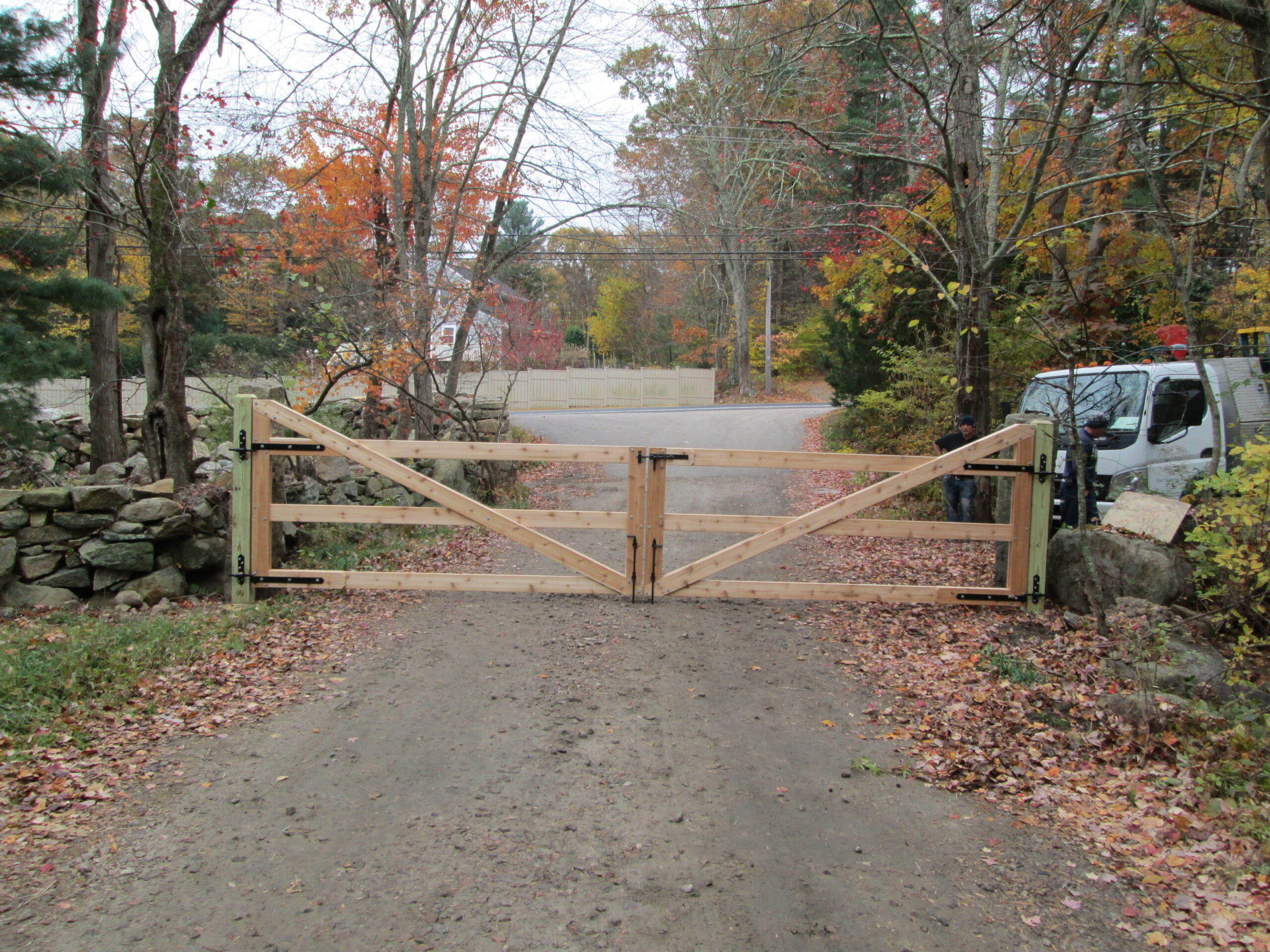
Gates are the most common thing homeowners wish they had planned. Before layout day, walk the yard and decide:
- How many gates? Backyard, side yard, a pool, a garden or a driveway.
- How wide? A lawn mower, wheelbarrow or trailer needs more than a standard walk gate.
- Which way do they swing? Think about slopes, snow and where the latch should sit.
- Do you need a double gate? Deliveries, a boat or equipment may need one.
Our fence gate guide explains width, swing and hardware in detail.
Step 5: Clear the Way for the Crew
A fence crew needs to reach the line with tools and materials. A quick prep list saves time:
- Trim branches, brush and vines along the fence line.
- Move furniture, grills, planters and play equipment back from the line.
- Mark sprinkler heads and anything fragile you want protected.
- Secure dogs and children on work days, and tell us about any pets.
- Make sure the crew can get to the yard through a gate, driveway or side access.
- Tell us about stone, ledge and old foundations you know about. Connecticut yards are full of them.
Why post depth matters here too. Posts must go deep enough to resist frost, which is another reason you want the lines marked first. Our guide to fence post depth and frost heave explains why.
Step 6: Confirm the Scope in Writing
Before work starts, make sure the estimate states the material, height, footage, gate locations and sizes, and what happens to the old fence. Pricing depends on footage, terrain, gates and material, and Arrow quotes after measuring. For typical numbers, see our fence cost guide, and if you are comparing proposals, use our list of questions for your fence contractor. If you want to spread payments, financing is available through our partner Enhancify.
When You Should Wait
Hold off if the markout is not complete, you are not sure of the property line, a required permit has not been approved, or you have a neighbor dispute that has not been settled. A short delay costs much less than moving a fence or repairing a cut line.
If this is a business or public site, see our commercial fencing page, and our guide to school, park and municipal fencing for what public projects should specify.
Call Before You Dig Connecticut: Common Questions
How far ahead do I need to call 811 in Connecticut?
The PURA notice says at least two full business days before digging with power or mechanized equipment. Call 811 or go to CBYD.com. Ask your contractor who is making the call.
Do I need to call 811 if I am digging by hand?
The requirement described by PURA applies to excavation with power or mechanized equipment. Even so, utilities recommend calling before any digging, and shallow lines can be hit by a hand shovel.
Will the utility markout show my sprinkler lines?
Generally no. Utilities mark their own lines, not private ones such as irrigation, invisible dog fence wire, landscape lighting or power to outbuildings. Find those yourself and tell your fence contractor.
What do the colored paint marks mean?
Red is electric, yellow is gas, oil or steam, orange is communications, blue is water, green is sewer and drain, and white shows the proposed dig area.
Should I get a survey before building a fence?
If you are not sure where the line is, yes. Look for survey pins first, and do not move them. A licensed surveyor can stake the line for you.
How do I schedule a fence estimate?
Call (860) 267-6636 or use the contact page. We walk the line, look at gates and access, and quote after measuring.
Ready to Plan Your Fence?
We will walk the line with you, flag the things to settle before digging, and give you a clear quote with no pressure.
CT Home Improvement Contractor Reg. HIC.0537503