
Security Fencing in Connecticut for Commercial and Industrial Sites
Security fencing Connecticut businesses can rely on starts with the real risk. Here is how to match height, fabric, top treatments and gates to the real risk, and when a fence is not the answer.
Most security fencing problems come from buying the wrong fence for the actual risk. A fence will not stop a determined intruder by itself, but a well-chosen perimeter slows people down, shows who is allowed in, keeps casual trespassers out and gives your cameras and lighting something to work with. This guide is for facility managers, property owners and business owners who need to decide what to build.
In this guide
- Start With What You Are Protecting
- How a Security Fence Contractor Connecticut Businesses Hire Should Work
- Security Fencing Connecticut Sites Need: The Building Blocks
- Which Fence Fits Which Job
- Mistakes We See on Security Fence Projects
- Schools, Parks and Public Sites
- Questions to Ask Before You Sign
- Permits, Utilities and Planning
- Security Fencing Questions, Answered
- Plan a Secure Perimeter for Your Site
Start With What You Are Protecting
Before height or material, answer three questions. What are you protecting: equipment, inventory, vehicles, people or the public from a hazard? Who is the problem: casual trespassers, kids cutting through, or theft? And how do people and trucks need to get in and out?
Those answers decide almost everything. A storage yard that needs to deter theft is a different job from a utility enclosure that mainly needs to keep people away from equipment, and a parking lot edge that mainly needs a clean look is a third job.

How a Security Fence Contractor Connecticut Businesses Hire Should Work
A good security fence contractor Connecticut owners can rely on starts with a site walk, not a catalog. That means measuring the perimeter, looking at grade and drainage, finding gate locations, and noting where utilities run. Our commercial process starts with a site assessment, then a written scope with materials and pricing, then an in-house build with our own crews, then a final walkthrough. Read more on our commercial fencing page.
Security Fencing Connecticut Sites Need: The Building Blocks
Height
Taller means harder to climb and slower to defeat, and commercial perimeters commonly run 6 to 8 feet. Height is also where zoning bites, so verify your town’s limits first.
Fabric and framework
Chain link is the workhorse for a reason. It is strong, you can see through it, and it costs less per foot than almost any alternative. Galvanized fabric is the standard for corrosion resistance; vinyl-coated black or green blends in better. Heavier fabric and larger posts cost more and resist cutting and pushing better.
Top treatments
Barbed wire extensions are the classic add-on for industrial sites. They add height and deterrence but are restricted in some zones and can create liability near public sidewalks. Ask about local rules before you specify them.
Privacy slats
Slats hide equipment and inventory from view, but they also block your own sightlines and catch wind like a sail. If you rely on cameras or on neighbors noticing activity, think twice before covering the entire fence.
Gates
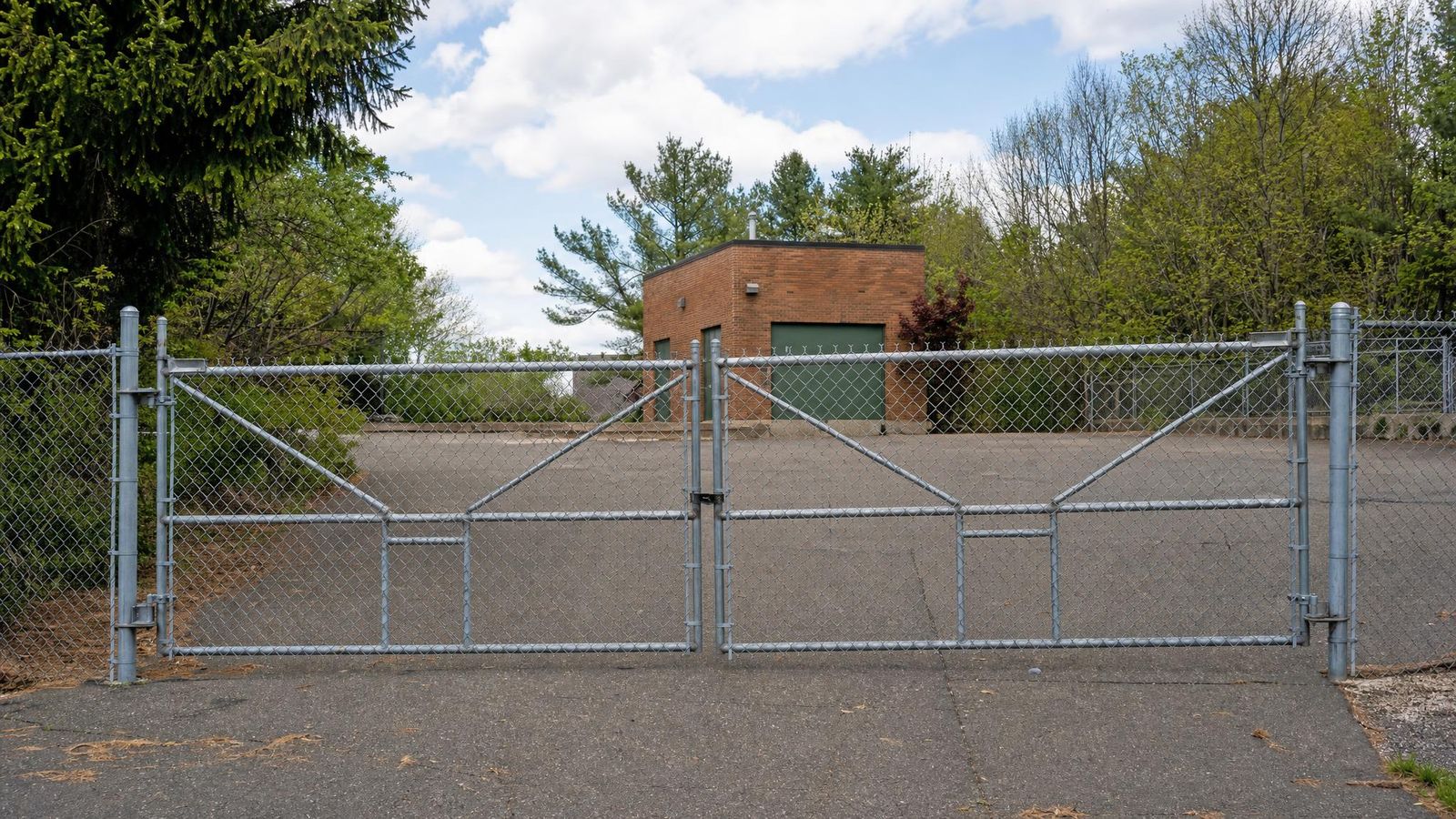
Gates are the weak point of nearly every perimeter. A gate that does not close and latch firmly is a gate that is left open. Plan width for the largest truck, choose the swing or slide that fits your site, and decide up front how access will be controlled. See our fence gate guide for the options.
Want a firm number for your property?
Which Fence Fits Which Job
| Fence | Good for | Limits |
|---|---|---|
| Chain link, 6 ft | Equipment yards, lots, general perimeters | Basic deterrent only |
| Taller chain link with barbed wire top | Industrial sites and storage | Zoning limits, appearance, liability |
| Chain link with privacy slats | Hiding materials and vehicles | Blocks sightlines, adds wind load |
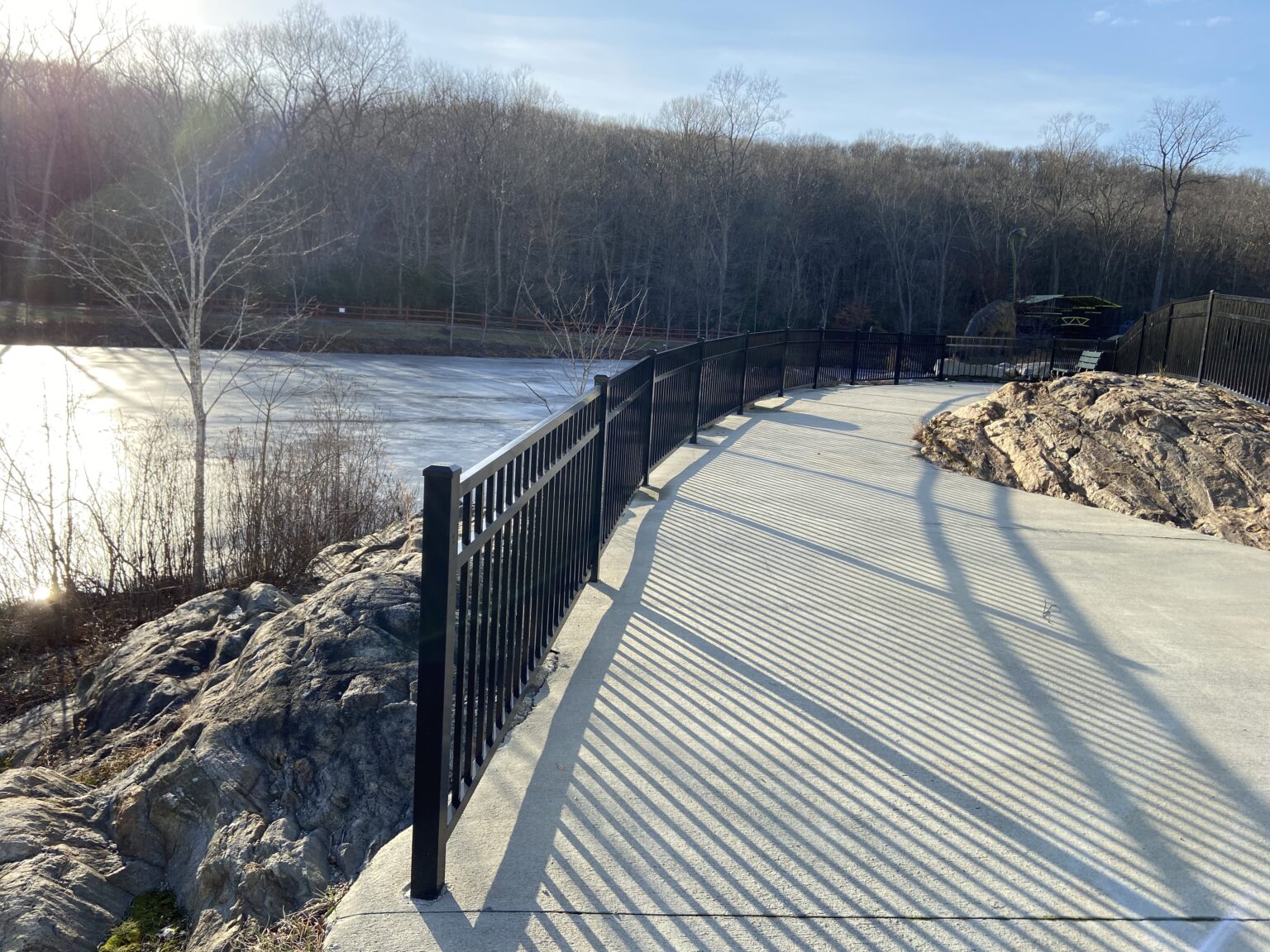
| Commercial aluminum | Office frontage, entrances, walkways | Better looking than chain link but costs more per foot, see our aluminum page |
| Cedar or vinyl screening | Dumpsters and equipment screening | Not a security barrier |
Mistakes We See on Security Fence Projects
- Buying height alone. A tall fence with a loose gate is not secure.
- Ignoring ground. Gaps under the fence on uneven ground are easy to crawl through. Grade needs to be addressed during layout.
- Skipping utility checks. Hitting an underground line is dangerous and expensive. Read our guide on calling before you dig.
- Hiding everything. Full privacy can reduce security by removing natural surveillance.
- Forgetting maintenance access. Leave room to mow, plow and service the fence line.
When a security fence is not the answer
If the real issue is employees propping gates open, a camera blind spot or poor lighting, a taller fence will not fix it. And if the problem is people crossing a public space, a fence may just move the path. A fence is one layer. Pair it with lighting, cameras and clear procedures. The federal CISA physical security guidance explains the layered approach.

Schools, Parks and Public Sites
Municipal and school work adds public-use requirements: safe edges, gates that open for emergency vehicles, and compliance with bid documents. We cover those separately in our school, park and municipal fencing guide. For a town example, see our Enfield chain link page.
Questions to Ask Before You Sign
- Who measures the site, and is the quote written with materials, heights and gate details listed?
- What is the fabric, post size and spacing, and how deep are posts set?
- How are gates hung and latched, and who supplies any operators or access control?
- Who handles permits, utility mark-out and any insurance certificates?
- Will the same company install the fence, or is the work subcontracted? Our crews are our own employees. See our guide to questions for a fence contractor.
Permits, Utilities and Planning
Commercial fences are more likely to need a permit or site-plan review than a backyard fence. Check with the town before you order, and see our permit guide. Utility mark-out is required before digging, so call 811 early. We handle the build; you or your property manager should confirm approvals and tell us about any insurance requirements so we can match them.
Security Fencing Questions, Answered
How tall should a commercial security fence be?
Commercial perimeters commonly run 6 to 8 feet, and the right height depends on what you are protecting and what your town allows. Zoning often limits fence height and what can go on top, so confirm with the town before you finalize a design. We discuss height at the site visit.
Is chain link or aluminum better for security?
Chain link is the standard for secure perimeters because it is strong, visible through and cost-effective. Aluminum is better where appearance matters and the goal is to define a boundary, such as an office frontage. Our chain link vs ornamental fence comparison goes deeper.
Can you add barbed wire or privacy slats?
Yes, our commercial work includes chain link with barbed wire tops and privacy slats. Some Connecticut towns restrict barbed wire in certain zones, so check local rules first.
Do you handle automatic gate openers and access control?
Plan for this at the quote stage. We build and hang the gates and design the gate layout, and automatic operators or keypad and card-reader systems should be discussed up front so everyone knows who supplies and wires them. Ask us what we coordinate on your project.
What does a commercial security fence cost?
It depends on footage, height, fabric, top treatment, number and type of gates, terrain and utilities. We give a written scope and price after a site visit rather than a number from a satellite photo. For baseline chain link ranges, see our chain link fence options and cost guide.
Who do you work for?
Industrial facilities, equipment yards, retail and office parks, healthcare campuses, schools, parks, churches and nonprofits, HOA communities and municipal sites. See our commercial fencing page.
Plan a Secure Perimeter for Your Site
Tell us what you need to protect. We will visit the site, review options and give you a written scope and price. Estimates are free.
CT Home Improvement Contractor Reg. HIC.0537503