
How Do You Choose a Fence for Curb Appeal and Resale in Connecticut?
A fence is part of how your house looks from the street. Match it to the architecture, the neighborhood and the sight lines, and it helps. Pick it badly, and it fights the house. Here is how to choose with a future buyer in mind, without overpromising on value.
People often ask whether a fence adds value to a home. The honest answer is that it depends on the fence, the house, the street and the buyer, and nobody can promise a return. What we can say from decades of building fences is that a well-chosen, well-kept fence makes a property look finished, while a mismatched or neglected one makes it look tired. This guide is about the first outcome: how to choose style, material, color and height so the fence belongs with the house, works for how you live, and will not be a problem when you sell. We do not quote resale percentages here because they would be guesses.
For curb appeal, choose a fence that matches your home’s architecture and the neighborhood, keeps the front of the house visible, and is built from a material you will keep in good shape. Low open styles such as picket or aluminum suit front yards; taller privacy fences belong at the back and sides. No one can promise a resale return, but a clean, appropriate fence usually reads better to buyers than none or a failing one.
In this guide
- What do buyers actually notice about a fence?
- How do you match a fence to your home’s style?
- How does the neighborhood affect the choice?
- What are sight lines, and why do they matter?
- Should the front and back fences be different?
- Which materials hold their looks best?
- How does landscaping work with a fence?
- Which small details change the look the most?
- What if you plan to sell in a few years?
- When is a fence the wrong choice for curb appeal?
What do buyers actually notice about a fence?
Buyers form an impression from the street before they walk in. A fence is part of that first view. They notice whether it fits the house, whether it is straight and clean, whether it blocks the view of the home, and whether the yard behind it looks like usable space. They also notice problems: leaning posts, rotting boards, a sagging gate or peeling paint tell a buyer there is deferred maintenance.
What they like is not universal. A family with children or a dog may see a fenced yard as a plus. A buyer who wants an open lot or a particular view may see it as something to remove. A local real estate agent who knows your neighborhood is the right person to ask how fences are received on your street. We build fences; we are not appraisers, and we do not make claims about added value.
How do you match a fence to your home’s style?
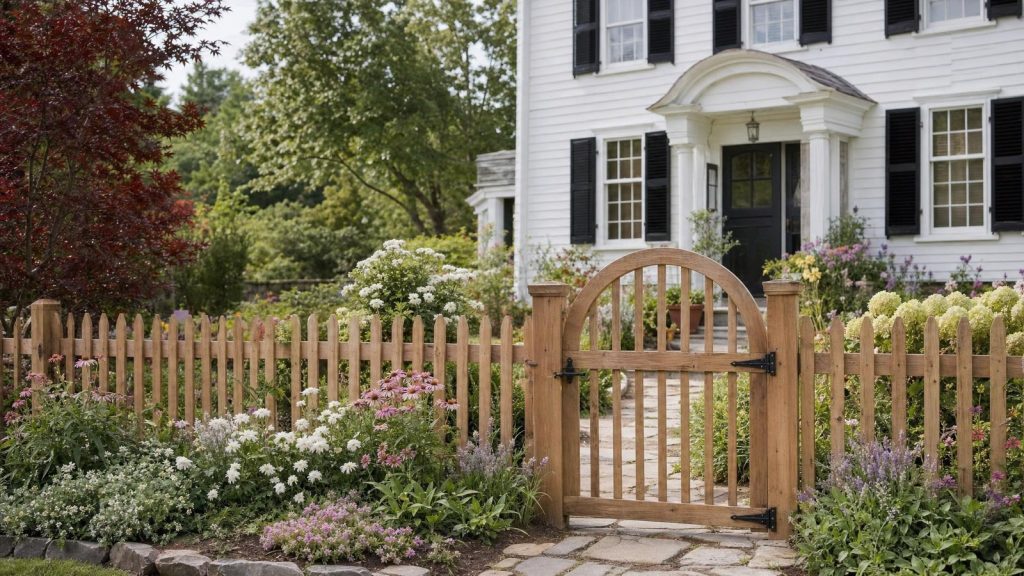
The simplest rule is to echo the house. A fence should look like it was chosen by someone who knew the house, not like an unrelated addition. Use the home’s style, trim color, siding material and landscape as your cues.
| Home style | Fence styles that usually fit | Watch out for |
|---|---|---|
| Colonial or Georgian | White vinyl or painted-look picket in front; privacy in back; aluminum with a classic top | Heavy, ornate gates; dark tall solid fences in front |
| Cape Cod | Cedar picket, natural or weathered; low scalloped or dog-ear tops; simple gate | Fences taller than the front windows |
| Ranch | Horizontal-feeling styles: split rail, board-on-board privacy at the back, black aluminum | Overly fussy or Victorian styling |
| Farmhouse or rural property | Post and rail, cedar board, stone-wall companions | High-gloss, ornate or very modern styles |
| Contemporary | Clean-lined aluminum, horizontal board privacy | Fussy detailing, scalloped tops |
| Historic or older home | Simple picket or period-appropriate wood; consult local rules | Vinyl in a historic district without checking approval |
Color matters as much as style. White vinyl suits white trim. Tan vinyl pairs with earth-tone siding and wooded lots. Natural cedar weathers toward gray and blends with trees and stone. Black aluminum frames a lawn without drawing the eye. Arrow Fence installs vinyl in white and tan only; if you need a different color, aluminum or stained cedar may be the answer. Our vinyl fence guide and cedar picket page show the options.
How does the neighborhood affect the choice?
Walk your street. What do the fences nearby look like? If every yard has a low picket or no fence, a six-foot solid fence in the front will look out of place and may not be allowed. In a rural area with stone walls and fields, rail fencing fits and a chain of vinyl privacy panels may not. In a dense neighborhood where lots are close, privacy matters more, and fences are often taller at the back.
Also check the rules. Height and placement limits are set by your town, and a homeowner association or historic district may add more. Our guides to fence height and placement rules and HOA fencing explain what to check. A style that conflicts with the rules can cost you a rebuild.
What are sight lines, and why do they matter?
A sight line is what you can see from a given spot. For curb appeal, there are three that matter:
- From the street to the house. A fence that hides the front door and windows makes the house look closed. An open or low fence keeps the facade visible and keeps the front garden part of the street view.
- From the house to the yard. Think about the view from the kitchen window, the deck or the patio. A fence that blocks the best view, or one that fills the window at eye level, can make rooms feel smaller.
- Across the property line. A tall solid fence right outside a neighbor’s window can strain relations. Consider a lower section or a landscaped buffer there. Our property line guide talks about the neighbor conversation.
Drive up to the house slowly, from both directions, and imagine where the fence would be. Stake the line or use a hose or rope on the ground if you can. What looks right on a drawing can look different at street level.
Should the front and back fences be different?
Often, yes. The front fence is for the street: it should be low, open and welcoming. The back and side fences are for the household: they can be taller and more private. Many homeowners use a picket or aluminum in front that transitions to privacy at the side gate. Keep the same material family and color so the change reads as intentional. A gate is a natural place to make the transition. See our gate guide for widths and styles.
Want a firm number for your property?
Which materials hold their looks best?
Curb appeal lasts only as long as the fence keeps looking good. A fence you cannot maintain will look worse over time than a simpler one you can.
| Material | Look | Upkeep that keeps it looking good |
|---|---|---|
| Vinyl (white or tan) | Clean, uniform, painted-look | Periodic washing; see our vinyl care guide |
| Cedar | Natural, warm, weathers to silver-gray unless stained | Staining or sealing; see how to stain and seal cedar |
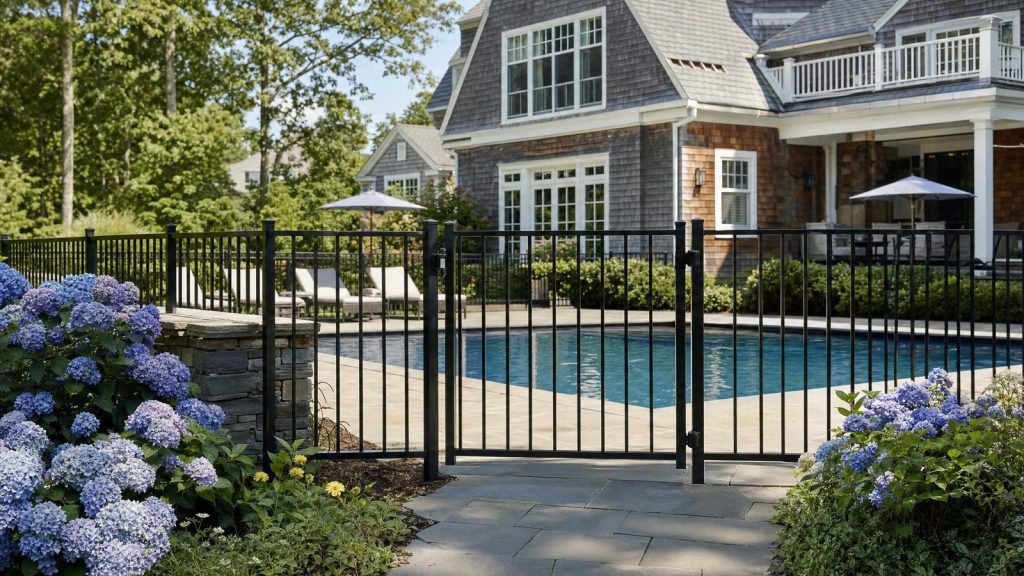
| Aluminum | Formal, open, slim | Occasional washing; see aluminum fence |
| Chain link (black or galvanized) | Utilitarian, nearly invisible in black | Minimal; best for large lots and sports courts |
| Rail | Rural, open | Wood care for cedar rails; see rail fence |
Before you choose, think about total cost and care, not only the price on the quote. Our fence installation cost guide covers what drives the price. A lower-cost fence you do not maintain may cost more in the long run than a better one you do.
How does landscaping work with a fence?
Plantings soften a fence. A row of shrubs or perennials in front of a privacy fence adds depth and breaks up a large flat surface. But leave clearance: plants touching the fence hold moisture against it and can scuff it. For plant selection and care, the UConn Extension is a reliable resource. If your fence will be near large trees, read our guide to fences near trees and drainage first.
Which small details change the look the most?
- Post caps. Flat, pyramid or ball caps give a fence a different character, and consistent caps look tidy.
- Top profile. Flat tops read modern; dog-ear and gothic tops read traditional; scalloped tops read cottage.
- Gate design. A gate is where the eye lands. A well-built, well-hung gate matters more than people expect.
- Finished side out. Facing the better side toward the street and neighbors is usually good practice and sometimes required.
- Straight lines and level tops. On slopes, decide between racked panels that follow the grade and stepped panels that stay level.
- Hardware color. Black or bronze hardware looks cleaner than shiny galvanized on many fences.
What if you plan to sell in a few years?
Keep it simple and neutral. A classic style in a common color is likely to appeal to more buyers than a bold one. Avoid very high fences in front, or styles that block light into the house. Make sure the fence is in good repair: fix a leaning post, replace damaged boards and touch up stain before you list. If you have a pool, the barrier is a separate safety issue; see our pool fence regulations post. If the property is in a historic district, the state historic preservation office has useful information at portal.ct.gov historic preservation.
When is a fence the wrong choice for curb appeal?
- Your best asset is the view. If the house looks out over a field, water or a distant ridge, a solid fence may do more harm than good. Consider an open style or none.
- The street is open and the lots are large. A front fence may look out of character.
- You cannot maintain the material. A weathered, peeling fence reads worse than none.
- You are trying to cover a problem. A fence does not fix a messy yard or a drainage issue; it hides them for a while.
- A cheaper fix does the job. Plantings, a hedge, a stone wall or a lower picket may give the same effect.
To see what finished fences look like, browse our fence gallery. Not sure what works for your home? Our guide on how to choose the right fence and the pages for privacy cedar and vinyl are good next steps, and our Avon and Middletown pages describe fences in those towns.
Last updated October 2026. This is general information for Connecticut homeowners, not legal, insurance or engineering advice. Confirm local rules with your town before you build.
Fence curb appeal and resale: common questions
Does a fence increase home value in Connecticut?
It can help or not, depending on the fence, the house, the neighborhood and the buyer. No one can honestly promise a specific return. A fence that suits the home, is well built and is in good shape usually helps a property look finished. A poor or neglected fence can detract. A local real estate agent can speak to your street.
What fence style looks best on a colonial house?
Low picket fences in white vinyl or cedar are traditional for the front, with privacy panels at the side and rear. Aluminum with a classic top also works. Keep the front fence low and open so the facade stays visible, and match the color to your trim or the landscape.
Should I put a privacy fence in my front yard?
Usually not. Most towns restrict front yard fences to lower heights, and a tall solid fence hides the house and can look out of place on the street. Use a low open fence in front and keep privacy styles for the sides and back, where they are generally better received.
What fence color is best for resale?
There is no single best color, but neutral options like white, tan, natural wood or black are the safest. They go with many house colors and appeal to many buyers. Pick a color that works with your trim and siding, and consider how it will age. Arrow Fence offers vinyl in white and tan.
Will buyers prefer a fenced yard?
Some will, especially families with children or dogs, and some will not. A fence that gives usable, safe yard space is often a selling point, while one that is dated, damaged or poorly placed can put buyers off. Your agent can tell you how buyers on your street tend to react.
Should I repair or remove an old fence before selling?
If the fence is mostly sound, repairing leaning posts, damaged boards and gates is often worthwhile. If it is rotted or failing across much of its length, replacing it or removing it may look better than leaving it. Compare repair and replacement costs first; our repair-versus-replacement guide can help.
How do sight lines affect fence design?
Sight lines are what you see from the street, from windows and across property lines. For curb appeal, keep the house visible from the street, avoid blocking your best views and take care near neighbors’ windows. Staking the line or marking it with rope before building helps you judge the effect.
Can I use a fence to improve privacy and still look good from the street?
Yes. Use a taller privacy fence at the sides and rear, set it back from the front corner of the house, and keep the front low and open. Add plantings to soften the privacy panels. Check local height rules and any association requirements before you choose the height.
Pick a fence that looks right on your house
We will talk through your home, your street and what you want the fence to do, then give you a written quote. See our gallery for examples. Fabricated in our East Hampton shop and installed by our own crews.
CT Home Improvement Contractor Reg. HIC.0537503