
How Do You Care for a Vinyl Fence in Connecticut Through Winter and Summer?
Vinyl is low maintenance, not no maintenance. Here is what a Connecticut vinyl fence needs in each season, how it handles cold, heat and snow, and the mistakes that cause cracks, stains and warping.
A vinyl fence will not rot, and it never needs staining. That is why so many Connecticut homeowners choose it. But a fence that sits outside through January ice storms and August humidity still collects dirt, mildew and the occasional hit from a snowblower or mower. This guide walks through the year, season by season, and explains why vinyl behaves the way it does when the temperature swings from single digits to the nineties. It is general care advice; always follow the care sheet that comes from your fence manufacturer.
Wash a vinyl fence once or twice a year with mild soap, a soft brush and a garden hose, and keep it clear of snow piles, string trimmers and heat sources. Vinyl is stiffer and more brittle in cold weather, so avoid knocking it with ice, shovels or plows in winter. Expect small seasonal movement from expansion and contraction; that is normal and the fence is built for it.
In this guide
- How often should you clean a vinyl fence in Connecticut?
- How do you wash a vinyl fence without damaging it?
- What about stubborn stains, scuffs and sap?
- What does a Connecticut winter do to a vinyl fence?
- How do you handle snow, ice and plows around vinyl?
- What does summer heat and sun do to vinyl?
- Why does vinyl grow mildew in Connecticut summers?
- What should you never do to a vinyl fence?
- Seasonal vinyl fence care checklist for Connecticut
- Do gates and posts need extra attention?
- When is a vinyl fence past simple care?
- When is vinyl the wrong choice?
- Vinyl fences in East Hampton and the surrounding towns
How often should you clean a vinyl fence in Connecticut?
For most yards, two washes a year is plenty: once in spring after the snow and road grit are gone, and once in early fall before the weather turns. Fences under trees, along a driveway, next to a lawn that gets sprinklers, or on the shady north side of a house may want a third wash because mildew grows where surfaces stay damp. Fences in full sun on a dry hillside may only need one.
The reason vinyl needs any cleaning at all is simple. The surface is smooth and non-porous, so dirt does not soak in, but pollen, tree sap, lawn fertilizer splash, mold spores and road film all stick to it. Left alone for several seasons, that film turns gray or green and gets harder to remove. A quick wash is easier than a restoration.
Late October is a good moment for the last wash of the year. Leaves, acorns and wet debris pile up against the bottom rail in fall, and if they are still there when snow arrives they hold moisture against the vinyl all winter. Rake or sweep them away from the fence line first, then wash.
How do you wash a vinyl fence without damaging it?
Keep it gentle. You are removing surface film, not scrubbing paint.
- Clear the area. Cut back vines, branches and shrubs touching the fence, and remove leaves and mulch piled against the bottom rail. Move planters and hoses out of the way.
- Rinse first. A garden hose with a spray nozzle knocks off loose grit. Starting dry and scrubbing grit around is how scuffs happen.
- Mix a mild cleaner. A bucket of warm water with a small amount of dish soap or a cleaner your manufacturer recommends works for ordinary dirt. For green or black mildew spots, many manufacturers allow a diluted vinegar solution or an oxygen-based cleaner. Check the care sheet before using anything stronger.
- Scrub with a soft brush or sponge. Work from the bottom up in sections so dirty water does not streak a clean area, then rinse from the top down.
- Rinse thoroughly. Leftover soap attracts dirt and leaves a film.
- Protect plants and the ground. Wash water carries soap and loosened mildew into the soil and, on a driveway, toward the storm drain. Use small amounts of cleaner and rinse onto lawn rather than pavement. The state explains why runoff matters on its CT DEEP stormwater page.
A pressure washer can crack or gouge vinyl, force water into the hollow rails and posts, and blast the finish off. If you use one at all, choose the widest fan tip and lowest pressure, stay well back, and never aim it up into the rail ends. A hose and a brush are almost always enough.
What about stubborn stains, scuffs and sap?
Different marks need different answers, and the safest approach is always to start with the gentlest option and test somewhere that does not show.
| Problem | Usual cause | Gentle first step |
|---|---|---|
| Green or black spots | Mildew or algae in shade and damp spots | Soft brush with diluted vinegar solution or oxygen-based cleaner, then rinse |
| Orange or brown streaks | Well water, sprinkler water with iron, or rusting hardware | Stop the water source if you can; ask the manufacturer or a fence pro about rust removers that are safe for vinyl |
| Gray scuffs | Mower, trimmer or tool contact | Mild soap and a soft cloth; some scuffs fade, some are permanent |
| Sticky tree sap | Pines, maples and birches overhead | Let it harden, lift what you can, then soft cloth with mild soap |
| Chalky, dull surface | Years of sun on the surface layer | Washing helps; a heavy chalk coat is cosmetic and is not repaired with paint |
Avoid solvents such as acetone, paint thinner or gasoline, abrasive powders and steel wool. They dull or etch the surface and can make a small mark much larger. Never paint a vinyl fence: paint peels, and a darker color absorbs heat, which can warp the panels.
What does a Connecticut winter do to a vinyl fence?
Vinyl, which is PVC, becomes stiffer and less impact-resistant as it gets colder. A fence that shrugs off a basketball in July can chip or crack from a hard knock at ten degrees. That is why most winter vinyl damage comes from impacts rather than from the cold itself.
Cold also makes vinyl contract. All fence materials move with temperature, and vinyl moves more than most. Rails slide in and out of post pockets by a small amount, and a good installation leaves room for that. In winter you may see a little more gap at rail ends; in summer it closes up again. This is normal and is not a sign of failure.
Frozen ground is a separate issue. Connecticut frost can heave posts that are set too shallow or in poorly drained soil. Our guide to fence post depth and frost heave explains how footings are designed to resist it. If a post leans after a freeze-thaw cycle, take photos and call your installer rather than forcing it back by hand.
How do you handle snow, ice and plows around vinyl?
Snow itself is rarely a problem for a vinyl fence. Wind-driven drifts can load a solid privacy panel like a sail, which is why post depth and spacing matter, but a fence installed correctly handles ordinary snow. What causes damage is what is done to the snow.
- Do not pile plowed or shoveled snow against the fence. A heavy bank pushes on the panels, and when it melts and refreezes it becomes ice that can bend rails and lift the bottom edge.
- Keep snowblower chutes pointed away. A blower throws ice chunks and gravel hard enough to chip cold vinyl.
- Brush light snow off with a soft broom if it builds up on a top rail or lattice. Do not chip ice off with a shovel, hammer or metal scraper; let it melt, or use a plastic tool.
- Tell the plow driver where the fence is, whether that is a contractor or a neighbor. Stakes or reflectors set along the line before the first storm help. If a town plow throws snow at a front-yard fence, document the damage and ask your town about its process.
- Go easy on de-icing salt near the base. Salt does not eat vinyl, but it harms lawn and plantings and can corrode metal hardware, latches and gate hinges. Rinse salt spray off in spring.
If a heavy storm breaks a limb onto the fence, it is a different kind of repair. See our guide to fence storm damage repair in Connecticut for what to check first.
Want a firm number for your property?
What does summer heat and sun do to vinyl?
In July and August the same expansion that left gaps in January closes them. A fence that was tightly fitted with no room for growth can bow or buckle in a hot spell, which is why installers leave expansion clearance and why you should never caulk, glue or screw rails tightly into a pocket unless the manufacturer says to. If a section looks wavy in hot sun, note which direction it bows and whether it relaxes at night; that tells an installer a lot.
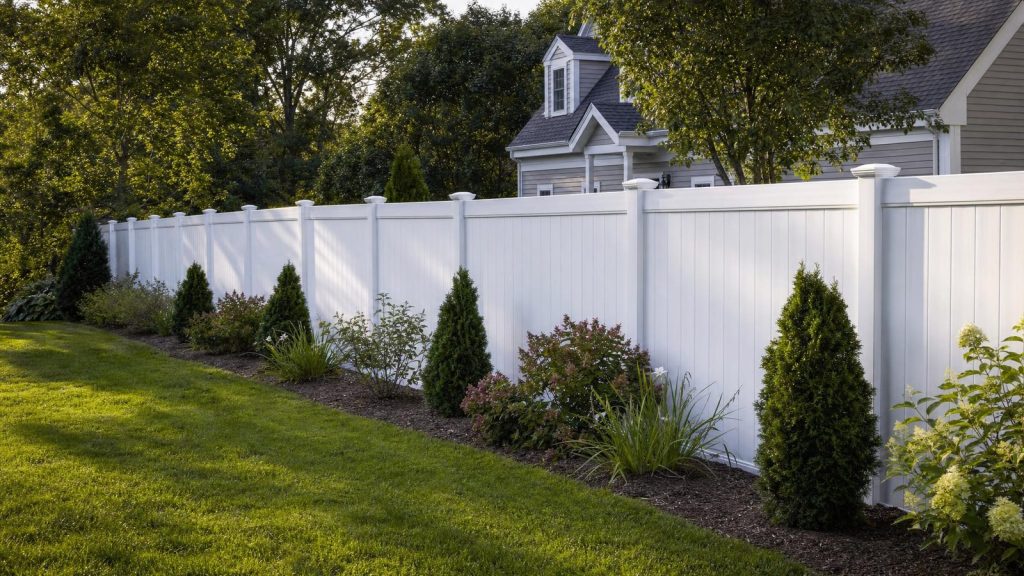
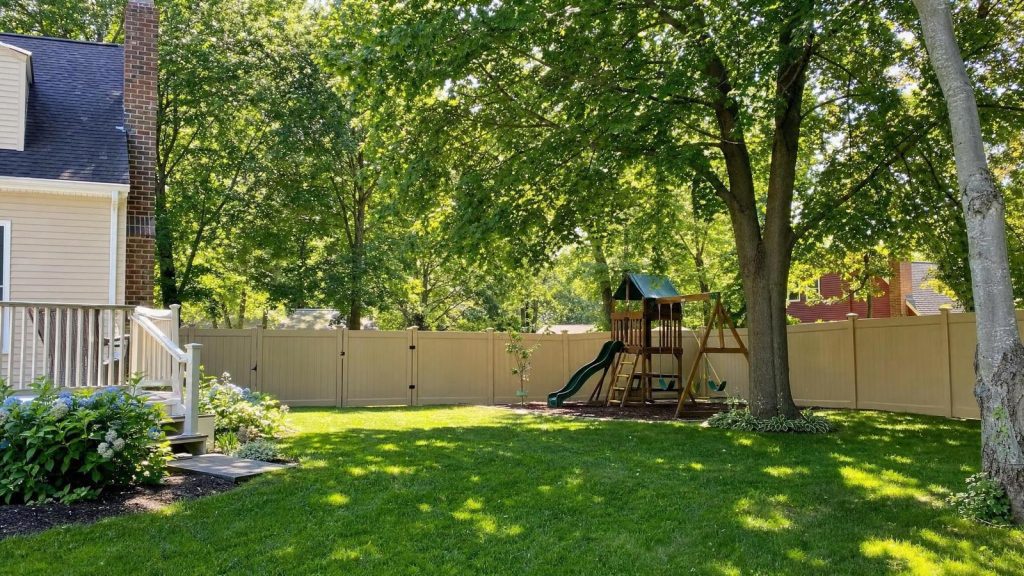
Sunlight is the other factor. Quality vinyl contains UV-blocking additives, but years of direct sun can still leave a slightly chalky surface, and darker colors absorb more heat. Arrow Fence offers vinyl in white and tan. Both are standard fence colors, and neither needs paint or stain. Fences facing south or west get the most sun and may show more chalking over the long run.
Heat can also come from places people do not expect:
- Gas and charcoal grills placed close to a fence can soften or distort it. Keep them several feet away.
- Fire pits and chimineas radiate heat sideways. The same rule applies.
- Strong light reflected from large windows, or from low-emissivity glass, has been reported to warp vinyl surfaces on siding and fences. If a wavy spot appears opposite a big window, that may be why.
Why does vinyl grow mildew in Connecticut summers?
Connecticut summers are humid, and shaded north sides of fences stay damp long after rain. Mildew does not eat vinyl, but it grows on the film of dirt that settles on it. Keeping the film off is the real prevention. Trim shrubs back from the fence, keep sprinklers from soaking the panels, and wash on schedule. If a sprinkler head hits the fence every day, redirect it. That fixes mildew and rust streaks at the same time.
What should you never do to a vinyl fence?
| Do | Do not |
|---|---|
| Wash with mild soap, a soft brush and a hose | Use a pressure washer up close, solvents or abrasive pads |
| Leave a few inches of clearance for plants and mulch | Let vines, ivy or shrubs grow through or lean on the fence |
| Keep grills, fire pits and heaters several feet away | Park a hot grill against the panels |
| Trim along the fence by hand or with the guard on the trimmer | Run a string trimmer right at the base of the posts |
| Hang lightweight decor on hooks that let panels move | Screw heavy items tightly through rails or fill rail pockets with sealant |
| Brush light snow off with a soft broom | Chip ice with a shovel or hammer in cold weather |
| Call your installer about a leaning or cracked post | Pound a post back into place or patch it with fillers |
Seasonal vinyl fence care checklist for Connecticut
| Season | What to do |
|---|---|
| Early spring | Walk the fence after the thaw. Look for leaning posts, cracked rails and loose gate hardware. Wash off winter road film and salt spray. Photograph anything that moved. |
| Late spring | Trim back plantings and re-set mulch a few inches from the bottom rail. Check sprinkler spray patterns. |
| Summer | Spot-clean mildew, sap and scuffs as they appear. Keep grills away. Check that panels are not bowing against something. |
| Early fall | Wash the whole fence, clear leaves from the base and test gate latches. |
| Late fall and winter | Mark the line for plow drivers. Keep piles of snow off the panels. Avoid hitting cold vinyl. |
Do gates and posts need extra attention?
Yes. Gates are the moving part of any fence, and they carry the most stress. In winter, ice in the latch or hinge can freeze a gate shut; clear it with warm water rather than forcing it. Check that the gate still swings freely, that the latch lines up and that it is not dragging. A gate that drops at the latch side is a sign of a shifting post or slack hinges. Our fence gate guide explains why gates sag and what usually fixes it.
Look at the posts, too. Vinyl post sleeves cover a structural core or a set post, depending on how the fence was built, and a sleeve that has loosened around a post can let water in. A white or tan post cap that has popped off should be reseated before water collects inside. If you are unsure what your fence was built with, the quote or invoice from your installer should say.
When is a vinyl fence past simple care?
Cleaning fixes dirt. It does not fix structural damage. A cracked rail, a split picket, a post that has leaned out of plumb, or a panel that has been bent by a fallen limb needs a repair. Many vinyl components can be replaced individually, so a damaged section does not always mean a whole new fence, but matching color and profile matters, and older fences may have sections that are no longer made. Our guide on fence repair versus replacement walks through how to decide.
Warranty questions are separate. Manufacturers often publish their own warranty terms for the vinyl product, and installers set their own for workmanship. Read the paperwork you received at installation and keep it with your records. We are not able to describe the terms of your particular fence here.
When is vinyl the wrong choice?
Vinyl suits many yards, but not every one. It can be a poor fit when:
- You want a natural wood look and are willing to stain it. Cedar will give you that, and our cedar fence maintenance guide shows what it asks in return.
- The fence will take regular impact, such as ball play against a panel, a dog that charges at it or heavy equipment passing close. Aluminum or chain link may hold up better.
- You want a very dark color. Dark vinyl absorbs more heat and is not offered in our line. We provide white and tan only.
- The site is very exposed to wind and the design is a tall solid panel. A different style or a shorter height may be wiser.
For a side-by-side look at what to expect before you buy, see our Connecticut vinyl fence guide, our vinyl fence page and our fence installation cost guide. For help with plants and soil around your fence, UConn Extension is a good, impartial source.
Vinyl fences in East Hampton and the surrounding towns
Arrow Fence has been building fences since 1979 from our East Hampton shop, and vinyl is one of the materials we install across New London, Windham, Tolland, Hartford and Middlesex counties and in Westerly and Watch Hill, Rhode Island. If you are near the shop, our East Hampton vinyl fence page has details, and our service areas page lists the towns we cover.
Last updated October 2026. This is general information for Connecticut homeowners, not legal, insurance or engineering advice. Confirm local rules with your town before you build.
Vinyl fence care in Connecticut: common questions
How often should I wash my vinyl fence?
Most Connecticut vinyl fences do well with a wash in spring and another in early fall. Fences in shade, under trees, or near sprinklers may need a third rinse because mildew and pollen build up faster. A soft brush, mild soap and a garden hose are enough for most dirt. Always check your manufacturer’s care instructions first.
Can I pressure wash a vinyl fence?
It is risky. A pressure washer can gouge or crack vinyl, force water into hollow rails and posts, and strip the finish. A hose with a nozzle and a soft brush is usually enough. If you do use a pressure washer, choose the lowest pressure and widest fan, stay back, and test a hidden spot first.
Does cold weather crack vinyl fences?
Cold makes vinyl stiffer and less impact-resistant, so a hard knock in winter is more likely to chip or crack it than the same knock in summer. Cold alone rarely does it. Avoid hitting the fence with ice, shovels or snowblower spray, and keep plow piles off the panels.
Is it normal for my vinyl fence to move with the seasons?
Yes. Vinyl expands in heat and contracts in cold, and rails are designed to slide a small amount in their post pockets. Slightly larger gaps in winter and tighter fits in summer are normal. If a section bows sharply, binds or pulls out of a pocket, call your installer to check the clearance.
How do I remove mildew from vinyl fence?
Rinse the fence, then scrub the spots with a soft brush and a mild cleaner. Many manufacturers allow diluted vinegar or an oxygen-based cleaner for mildew. Avoid solvents, abrasive pads and strong chemicals, rinse thoroughly, and reduce the dampness that caused it by trimming plants and redirecting sprinklers.
Can I paint or stain a vinyl fence?
Paint and stain are not recommended. They tend to peel, and a darker color absorbs heat that can warp the vinyl. Vinyl is made in its final color, and Arrow Fence installs it in white and tan. If the fence looks tired, try a thorough wash first before considering replacement of damaged sections.
Should I do anything to my vinyl fence before winter?
Clear leaves and debris from the base, give the fence a final wash, test the gate latch, and mark the fence line for anyone plowing or shoveling. Decide where snow will be piled so it does not rest against the panels. Also check for leaning posts, so you can photograph and report changes in spring.
When should I call a fence contractor instead of fixing it myself?
Call if a post leans, a rail is cracked, a gate drags or a section has been hit by a branch. Structural problems tend to get worse, and cold or wet weather makes them worse faster. Surface cleaning is a homeowner job. Anything structural is safer left to a contractor.
Questions about your vinyl fence?
Whether you are planning a new vinyl fence or trying to decide how to deal with a damaged section, we are happy to look at it and talk it through. Fabricated in our East Hampton shop and installed by our own crews.
CT Home Improvement Contractor Reg. HIC.0537503