
Fence Repair vs. Replacement in Connecticut: How to Make the Call
A leaning fence after a nor’easter doesn’t automatically mean a new fence — and a fence that looks fine can be one winter from falling over. Here’s the framework we use when Hartford County homeowners ask us which way to go.
Rule of thumb: repairs above this share of replacement cost favor replacing
Typical life of pressure-treated posts in CT soil
What cedar fencing delivers with basic maintenance
Where fences actually die — at grade, in the ground
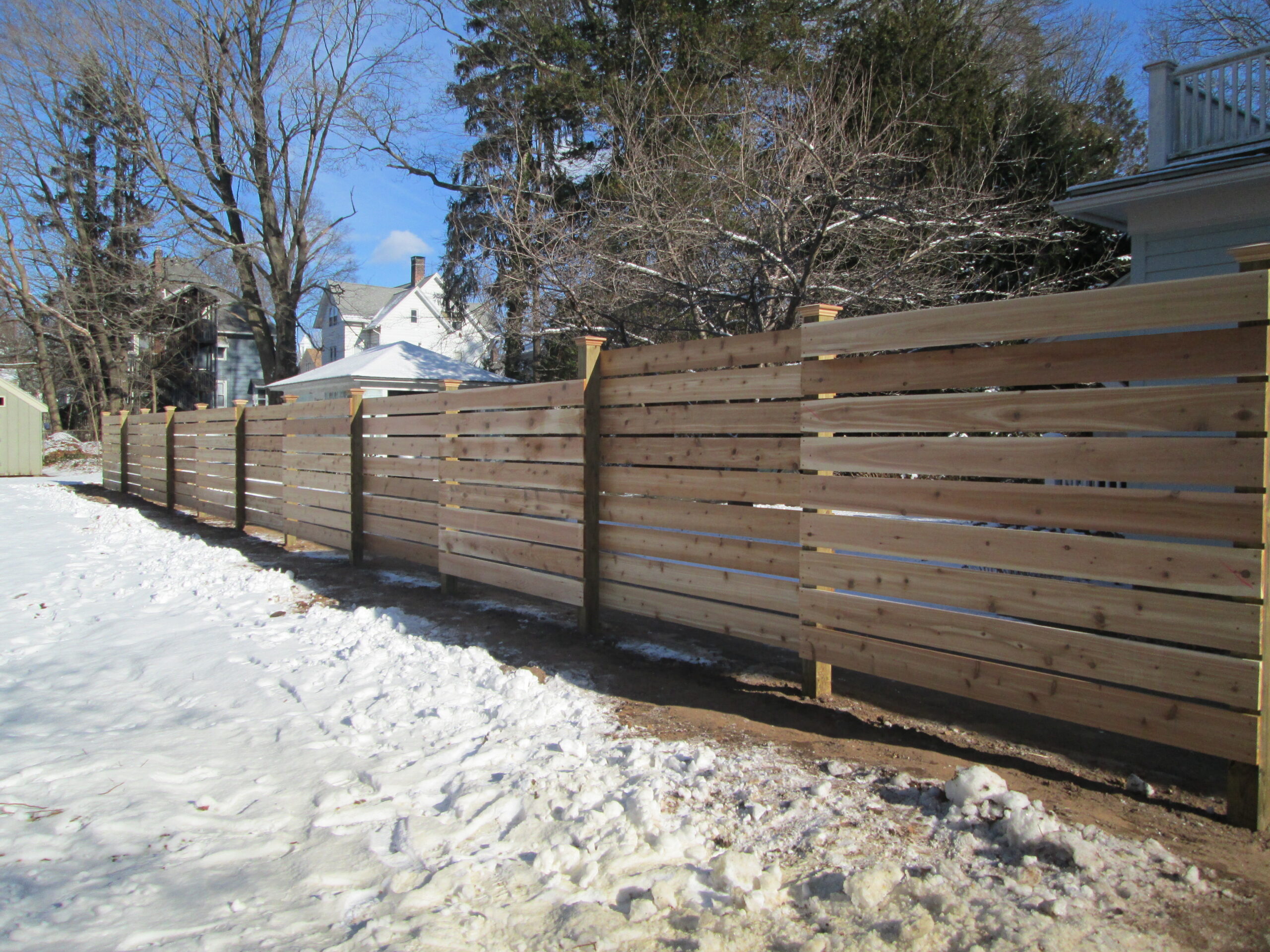
Fences Die at the Ground Line
The part of your fence you can see is rarely the part that’s failing. Wood posts rot in a narrow band right at grade, where moisture, soil contact, and oxygen meet; above and below that line the same post can be sound. A fence with weathered but solid boards on rotted posts is a replacement conversation. A fence with a broken rail or a few bad pickets on sound posts is a Saturday repair.
The test is simple and free: grab each post and push hard. Movement at the base — not flex in the fence, movement of the post in the ground — means the post or its footing is done. One or two loose posts in a long run is a repair. Every third post is a verdict.
When Repair Is the Right Call
- Storm panel damage: A tree limb through two panels of an otherwise sound fence is exactly what repairs are for — and often what homeowner insurance covers. Photograph everything before touching it.
- Individual post failure: A single heaved or rotted post can be pulled and reset properly (below the 42–48 inch frost line — shallow original setting is usually why it failed).
- Gate problems: Sag, latch failures, and dragging gates are nearly always hardware and hinge-post fixes, not fence problems. Our gate guide covers why.
- Cosmetic aging: Graying cedar is patina, not failure. Cleaning and re-staining buys years — see our cedar maintenance guide.
When Replacement Wins the Math
The 20–30% rule is our honest benchmark: when quoted repairs cross roughly a quarter of replacement cost on an aging fence, replacement usually wins — because the repaired sections and the tired ones don’t age together. You fix three posts this year, four different ones next year, and in three years you’ve paid for half a fence you don’t have.
Other replacement signals: widespread rot at multiple posts, a fence that has already been repaired more than once, chain-link fabric rusted through or stretched beyond re-tensioning, wood so far gone that new boards won’t hold fasteners, or a fence that was undersized or shallow-set from day one. And sometimes the honest answer is that the fence no longer fits the property — a new dog, a new pool, a new neighbor — and repair money is better spent toward the fence you actually need. Current per-foot numbers are in our Connecticut cost guide.
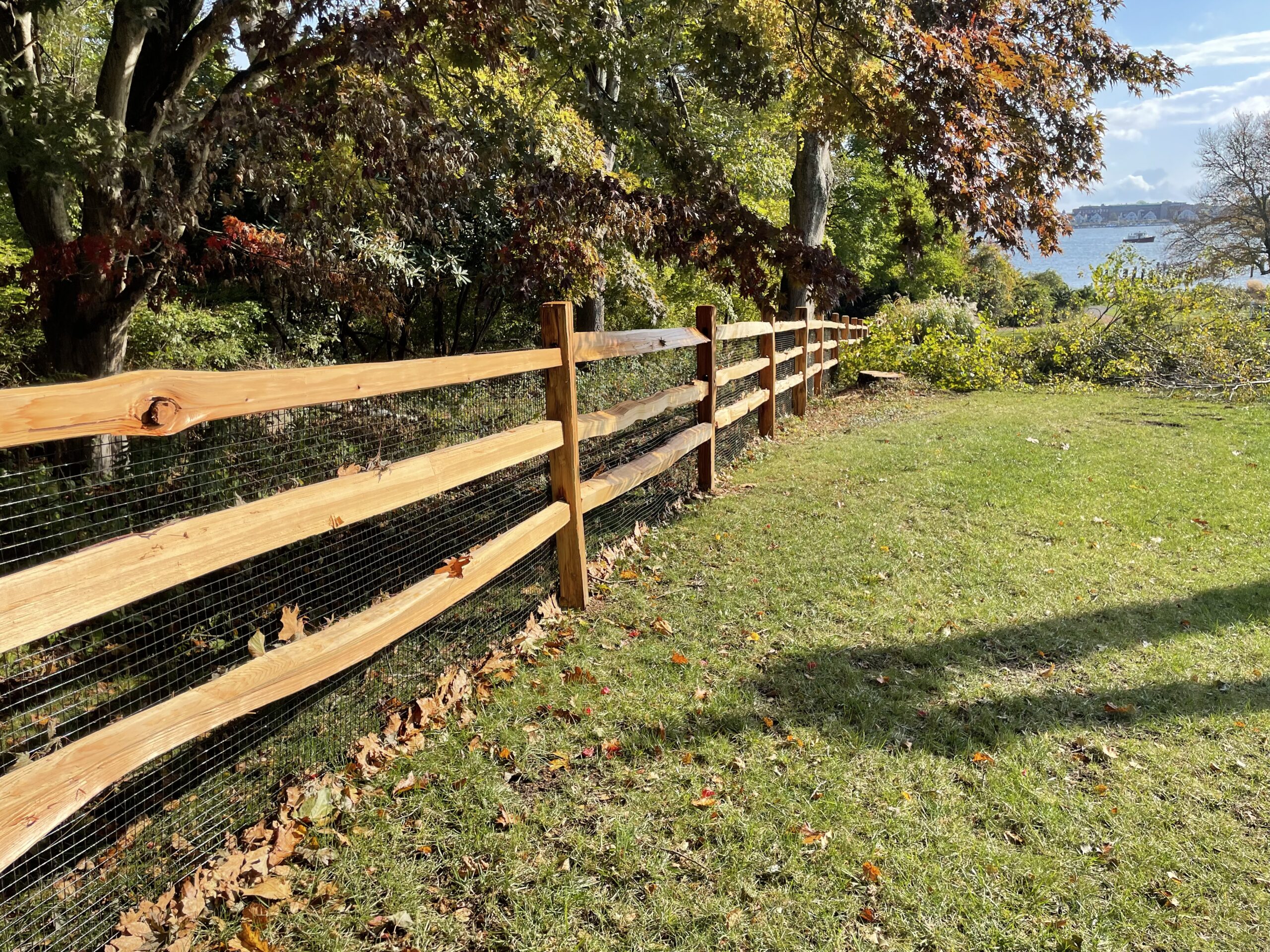
Local Expert Tip: The Nor’easter Checklist
After any big wind or wet snow event, walk the line and check three things: posts for new lean, panels for cracked rails, gates for latch alignment. Ten minutes in November catches the damage that becomes a domino run of failed panels by March. Frost heave does its work slowly — new lean in spring means a footing problem, not a wind problem.
What an Honest Assessment Looks Like
When we assess a fence, we’re checking post soundness at grade, footing depth, rail attachment, fastener condition, and grade changes since installation — and we’ll tell you plainly which side of the line you’re on. Sometimes that’s “this fence has five good years left, spend nothing.” A fence company you’d let quote a repair should be one you’d trust to talk you out of one — our vetting guide is the checklist for that.
Not Sure Which Side of the Line Your Fence Is On?
Arrow Fence Inc gives straight repair-or-replace assessments across Farmington, Avon, Canton, Simsbury, Burlington, and Hartford County — including honest “spend nothing yet” answers.